Hello

We're chin deep in the work of getting this magazine ready to share, if you want to get involved contact us with the form on the right (if you like forms).

If you're into contributing pictures, video, music, words, secret maps, and that kind of creative adventure stuff email: [email protected]

If you're into booking ads, making ad-like content, setting up meetings, and that sort of stuff email: [email protected]


123 Street Avenue, City Town, 99999

(123) 555-6789

[email protected]


You can set your address, phone number, email and site description in the settings tab.
Link to read me page with more information.

News

Slow Fashion

Stay Wild

The Endangered Art of Batik

Story and Photos by Melani Sutedja // @meloweeniee // @journeyonshop

IMG_5398.jpg

“Production is behind,” the head artisan tells me. “It’s been raining all week, so the floor where we paint the batik has been wet. It floods here in Indonesia.”

Oh, I know. I came home at 5 a.m. from a night of drinking in Bali to an Airbnb flooded four inches deep in water. All the flimsy bras and panties in my 45lb pack were drenched. As my mother always said, that’s life on the island of Java.

I was on the Silk Road to source batik for my company’s upcoming “heritage” curation, eager to find yards of fine textiles, those similar to the ones my mother held onto while migrating to America from Indonesia. Finding identical yards of naturally-dyed, handmade batik to support a collection was harder than I thought. I was slowly realizing why this industry hadn’t made big moves in the mass-markets out West despite its allure: Good fabric takes time to make.
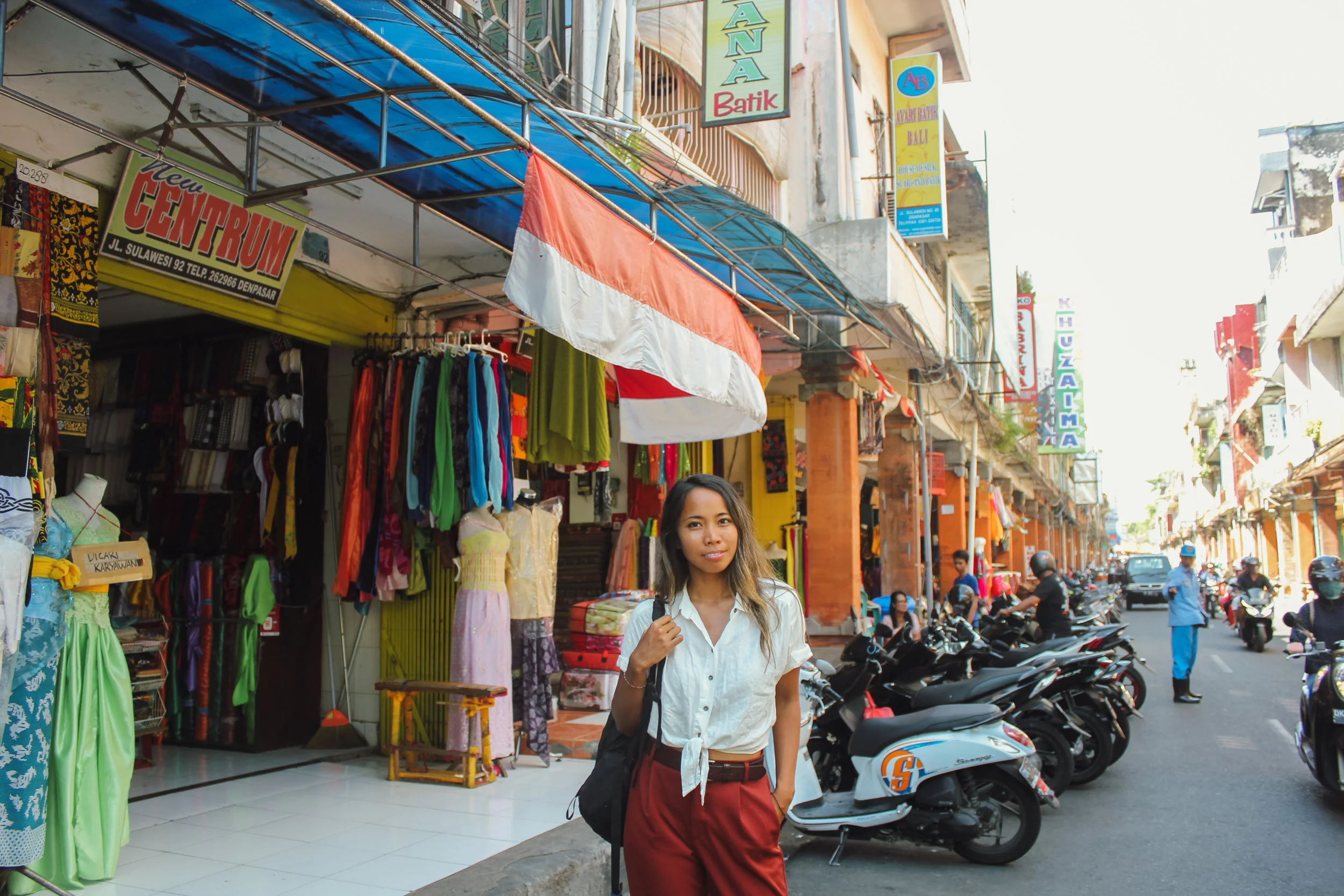
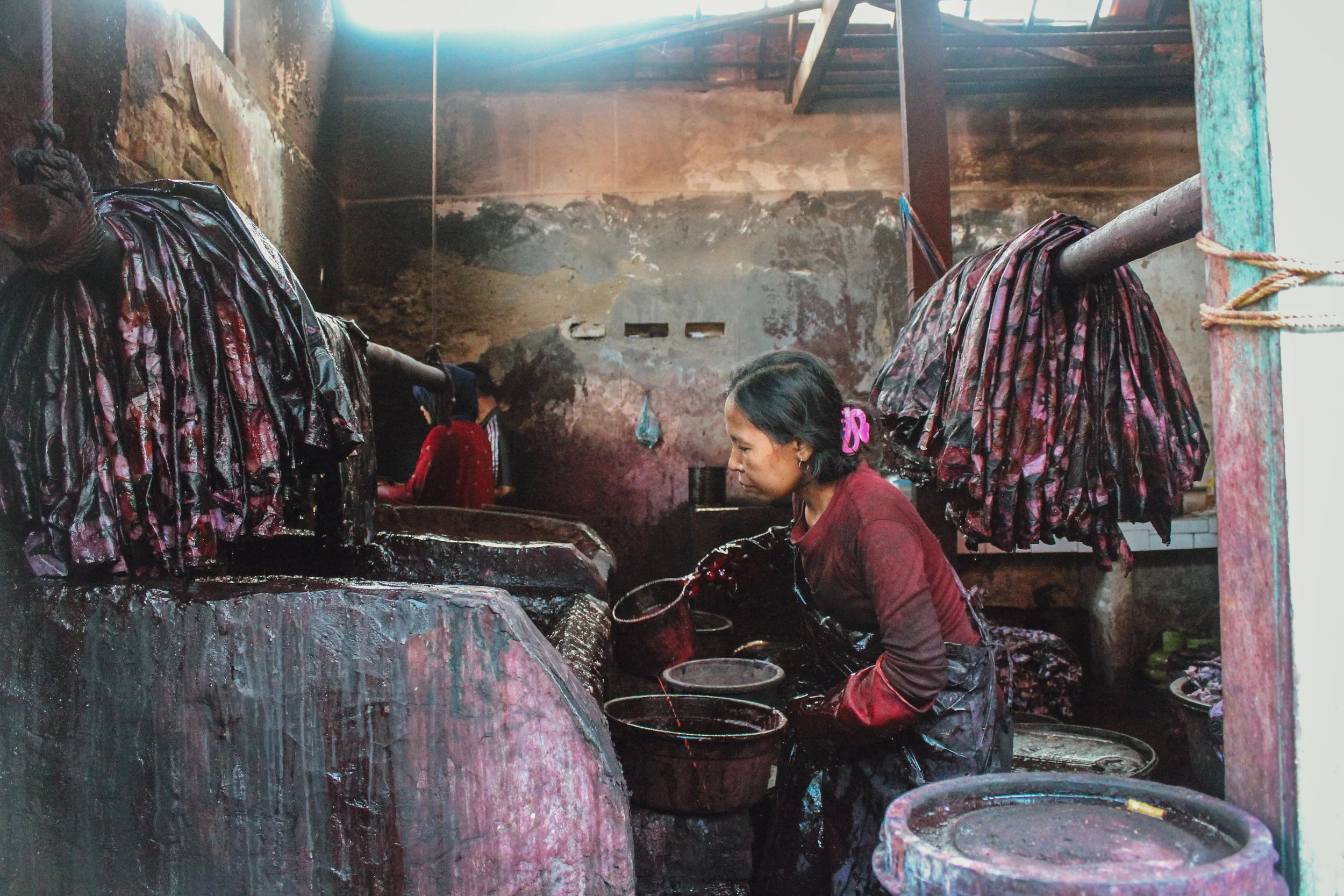
Batik is the ancient art form of wax-resistant dyeing. You’ve seen its lovechild in the Madiba shirts Nelson Mandela donned in South Africa and its predecessor in “crackled” Indian sarees. Yet, the 2000-year-old craft reached its highest expression in Indonesia. Wax is intricately hand-placed onto fabric, then dipped in dye. The fabric is eventually boiled to remove the wax, thereby exposing a pattern underneath the dye. Then re-waxing and re-dying is done as needed.

I met the artisan Dewi at her workshop in Yogyakarta, the cultural capital of Indonesia. Dewi is part of a diminishing population keeping this craft alive. She led me up a makeshift wooden scaffolding, showcasing cloth of every color drying under a patch of sun.

Batik is an integral part of Indonesian life and ceremony even though it was historically reserved for the aristocracy. Each motif has its own story, its own power. The unabashedly-named Semen Rama pattern, for instance, looks like exotic birds swimming in enticing tendrils. The motifs actually symbolize the eight paths to virtue from the Indian epic Ramayana, enabling the wearer to lead a “semi” (translation: robust) life.

“What’s this one about?” I ask Dewi, pointing to a geometric square motif with florals. “Chastity,” she explains, much to my reddened cheeks. That one may be sacrilege for me to sport.

It took four months to create a decadent two-meter silk floral I’ve been ogling. Each square inch required painstaking work: hours of maneuvering wax on a pen-like canting or stamping the entire piece by hand. The average Indonesian salary of $280 a month can’t afford such luxuries, which is why the majority of batik production is increasingly becoming machine-made. Why spend hours on one meter of fabric when you can digitally mass-produce it to meet consumer demand?

“It’s a challenge for those of us who want to preserve this tradition and make it more sustainable,” says Dewi.

IMG_9073.jpg

It’s a story I’ll hear again and again from artisans I meet in Surakarta, Bali, and Madura. Higher food prices have led to weakened consumer purchasing power, while fluctuating global exchange rates lead manufacturers to seek alternatives to quality dyes, most of which are imported. It’s a lose-lose situation where machine printers pump out less-intricate batik designs with cheaper, synthetic dyes that have negative impacts on environmental and worker health.

Still, artisans like Dewi are hoping to lead the charge by harking back to their indigenous roots and using eco-friendly dyes that can be found locally in nature: blues from indigo plants, browns from soga trees, and reds from noon fruits. Though more time-consuming to extract, it ensures consumer and worker safety while preserving the environment. She hopes other batik manufacturers will also prioritize their craft in the face of fast fashion.

“This is the batik process that four generations of my family taught me, and I don’t intend on changing that anytime soon,” she says.

Meanwhile, I came back from Indonesia with a smaller curation than I had imagined. I don’t know if these type of piece will still exist centuries from now. They remind me of my mother’s cloth, adorned with different stories to tell, some with names salacious enough to raise eyebrows. 

Ubud.jpg

Check out the collection // @journeyonshop

Can One Turtle Change the World?

Stay Wild

A Traveling Veterinarian Does What She Can to Answer That Question from Her Sailboat

Story by Sheridan Lathe // @vet.tails_sailing.chuffed


Photo by Regina Maria

Photo by Regina Maria

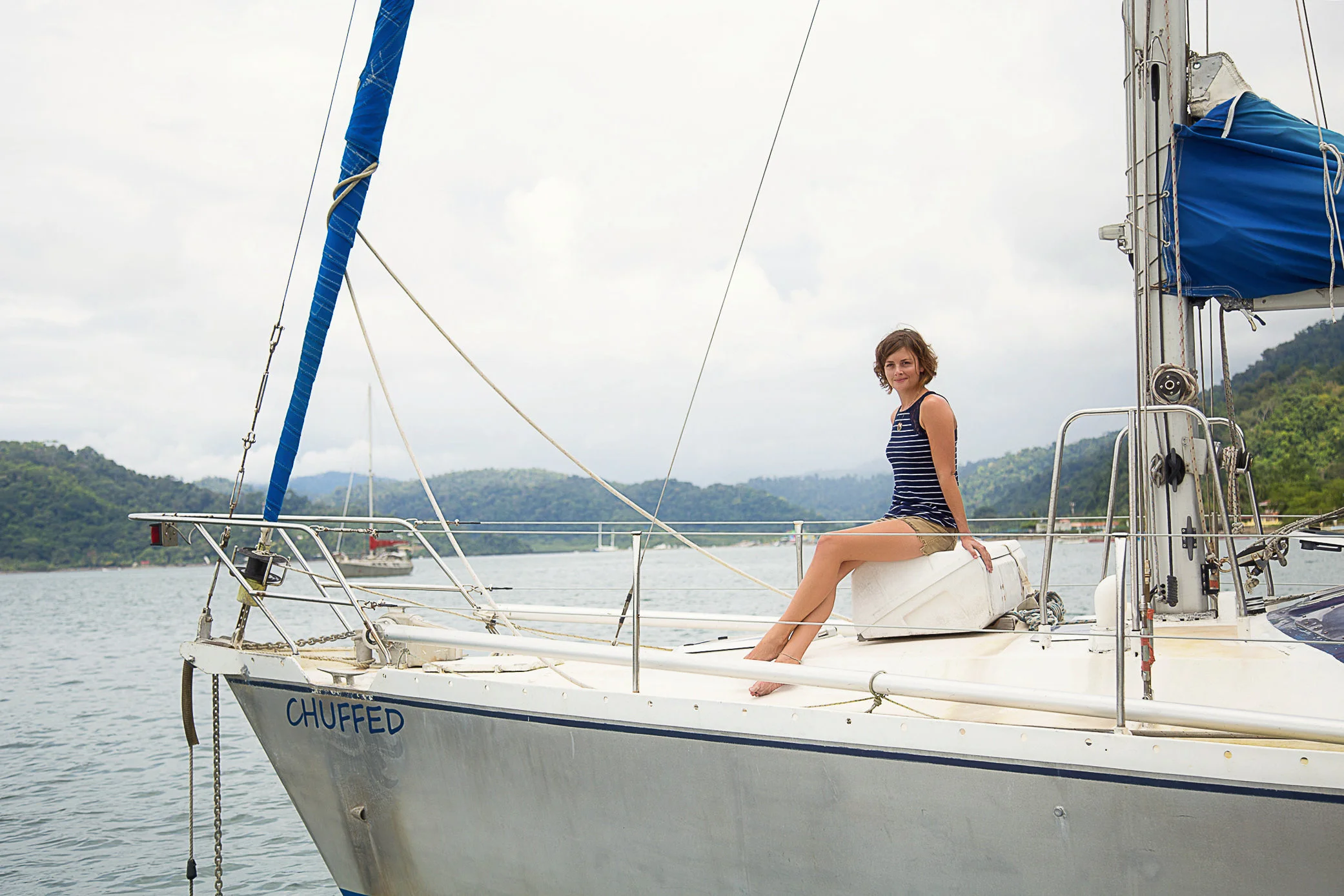
While sailing from Panama to Costa Rica, with the wind behind me, our sails ballooning forward, falling and rising with the swell of the ocean, I heard a gasp beside me. I peered over the rail to see an adult hawksbill turtle pop her head up out of the water, take a deep breath, then not resurface for at least another 20 minutes.

Although I have worked with turtles extensively in my career as a veterinarian, I still love seeing them in the wild where they belong. Like all animals in this world, they are at risk of endangerment, and there is no greater danger to the creatures that inhabitant our world than people.

I have traveled to Australia, Costa Rica, China, Thailand, Rarotonga, and others helping animals. During that time I have worked with everything from a cuddly koala to a 500-kg polar bear, and what has become apparent is that the majority of problems faced by animals are either directly or indirectly caused by humans.

IMG_0916.JPG

Since living aboard a sailboat, I have been to islands completely uninhabited by people, yet found animals in such places injured by human influence. One such story, which will always inspire me to do more, unfolded when we came across a young hawksbill turtle trapped in a fishing net on a tiny island in Panama. The closest village, with only 30 inhabitants, was over 10 miles away on a completely different island.

From a distance, this little island looked just like they should in a travel magazine: sandy beaches, clear water, and palm trees blending into the jungle. But, rowing closer, we began to see plastic water bottles and a myriad of other trash items lining the shores. A fishing net was hanging in a tree, and we thought we saw something dark in it.

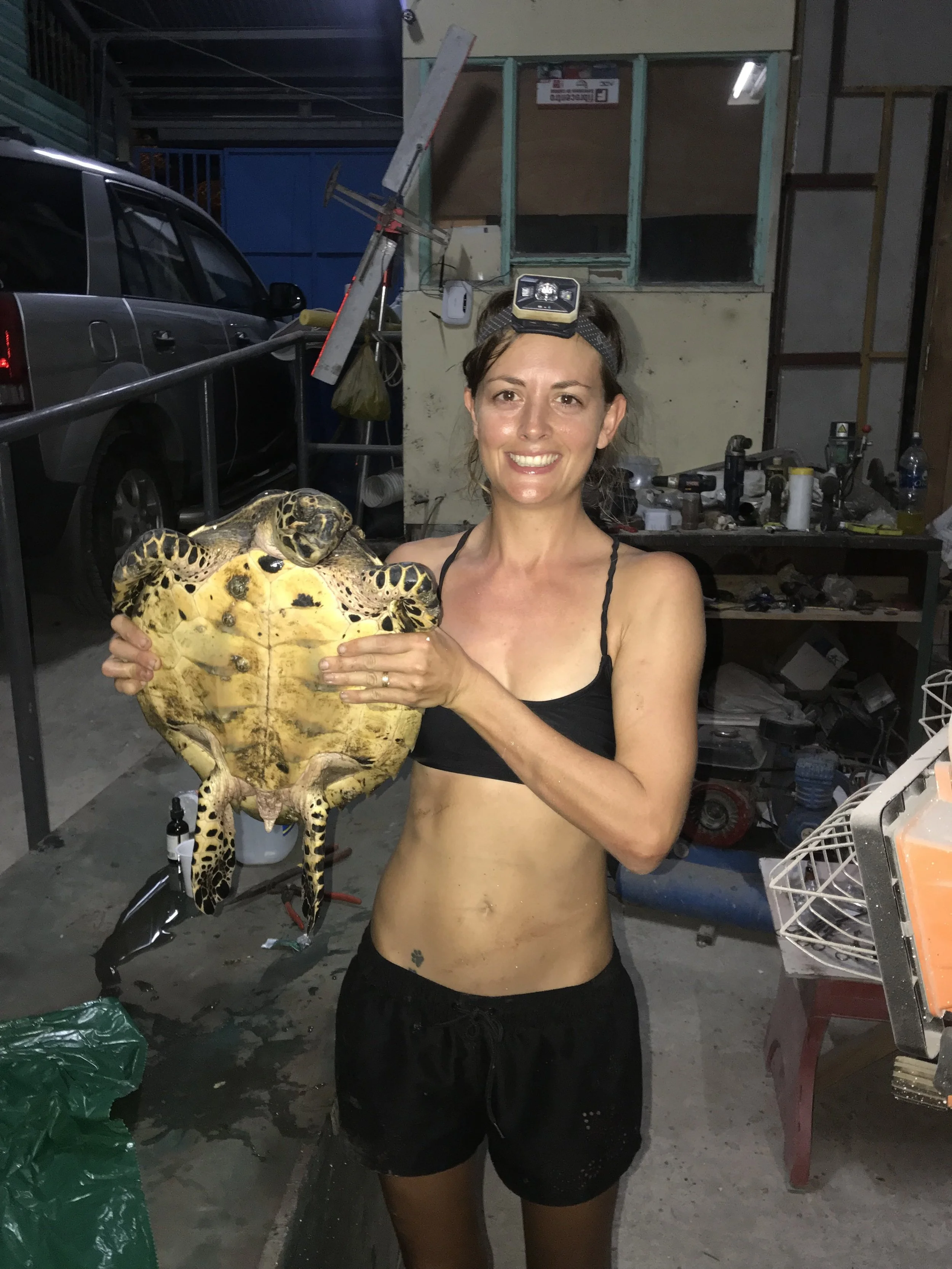
As we got closer, we realized it was a turtle. The fishing line was tightly entangled around her neck and limbs, so she dangled from the tree at low tide, then pulled under the ocean at high tide. She had obviously been stuck here for days, if not weeks, as the injuries were already trying to heal. We cut her free and returned to the boat, where I thankfully had veterinary supplies.

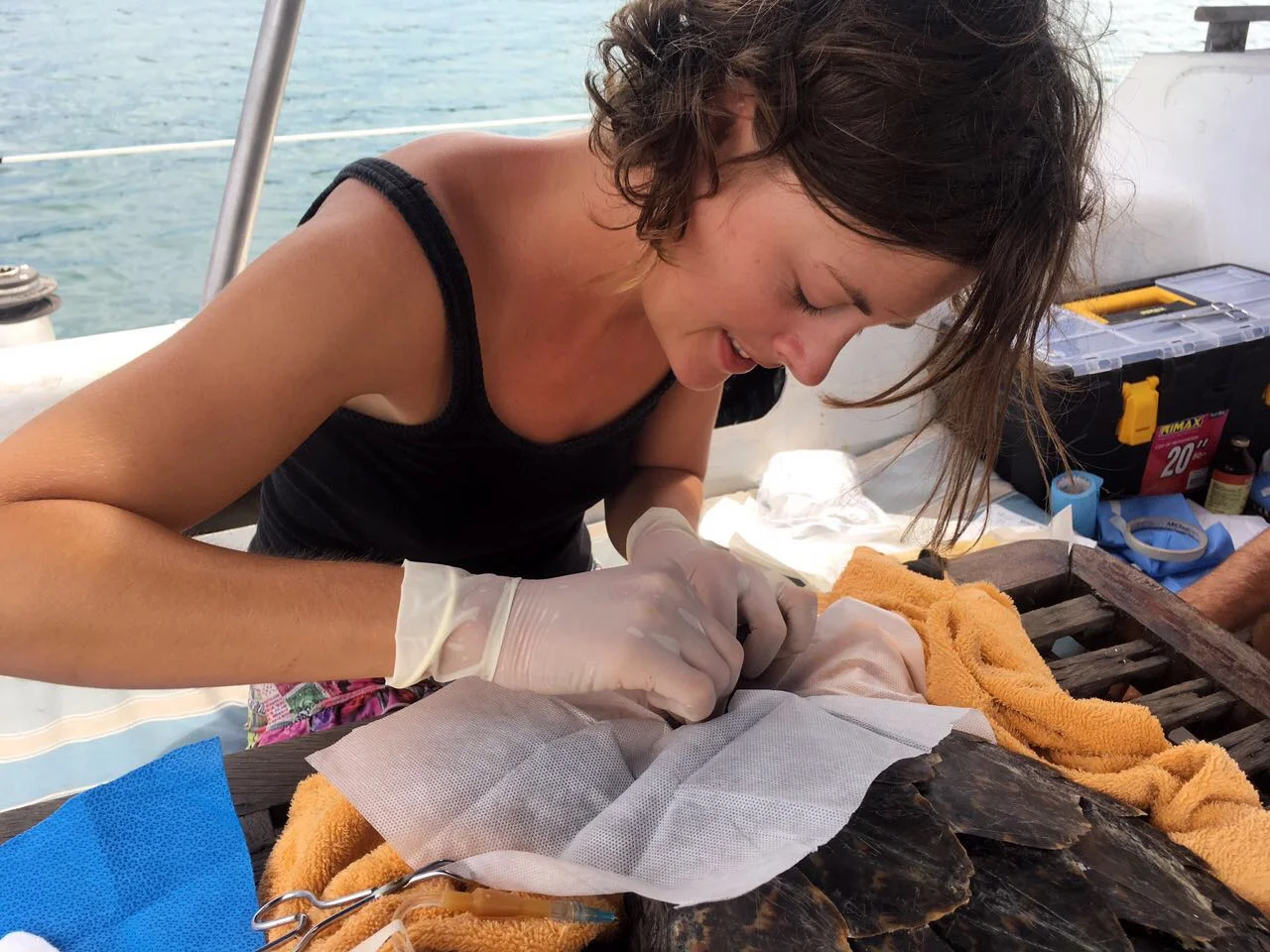
I administered anesthesia and pain relief medication before investigating the extent of her injuries. Upon closer inspection, I realized she was a Hawksbill Turtle, a critically endangered species of marine turtle. She had a broken hind flipper, which had been almost completely strangled by line, and deep cuts around her front flippers and neck. I patched her up with sutures and pinned the broken leg with an extra long, thick needle, all on a moving rolling sailboat. She then began an intensive regime of antibiotics, pain relief, force-feeding, and gentle exercise in shallow water.

The turtle shared our floating home for a total of three weeks before we made it back to Panama City where she went into the trusted hands of a local marine veterinarian. Unfortunately, two weeks later she developed a severe infection and her kidneys began to fail. It was all just too much for her little body, and within days she was euthanized.

IMG_9767.JPG

I was surprised by how hard her death hit me. I have lost many patients over the years, and,  although it is always sad, you learn to compartmentalize those feelings of grief so that you can continue your life and career. However, this little turtle had swum her way into my heart. Knowing her species was critically endangered, and that her injuries were preventable if not for humans, I left feeling very disappointed.

Perhaps you have been waiting for the happy ending and might be thinking my experiences have left me cynical about human nature and the endangerment of animals. However, the exact opposite is true. Not only have I been exposed to some of the worst effects humanity has on animals, but also the greatest. I have met countless people who have dedicated their entire lives to saving just one type of animal from one single cause of endangerment, and the truth is they are making a real difference. It is both the sad encounters and the positive ones that inspire me to keep going, saving animals on a voluntary basis everywhere I travel.

Since beginning this journey two years ago, I have helped over 2,000 individual animals and provided education for local veterinarians and animal lovers, hoping the ripple effect from this can save even more animals from endangerment. Each and every one of us can contribute in small and easy ways that can have a huge impact. If you have a pet, ensure they are completely vaccinated, protecting them and the wildlife around them from disease. Reduce your use of plastic. Recycle more. Volunteer at local animal shelters. Or simply spread the word about other people who have amazing projects protecting animals.

So, in answer to my question: Yes, I think one turtle can change the world. Let her story inspire you to make changes in your life that help prevent animal endangerment. Small things, when done by many people, add up. We are ultimately responsible for the safety of our planet: It’s time to decide to save it as well as the animals that call Earth home. 


Help support Sheridan’s good work helping animals in remote places // Go.Fund.Her>>>

Am I Doomed?

Stay Wild

Looking at the problems and solutions

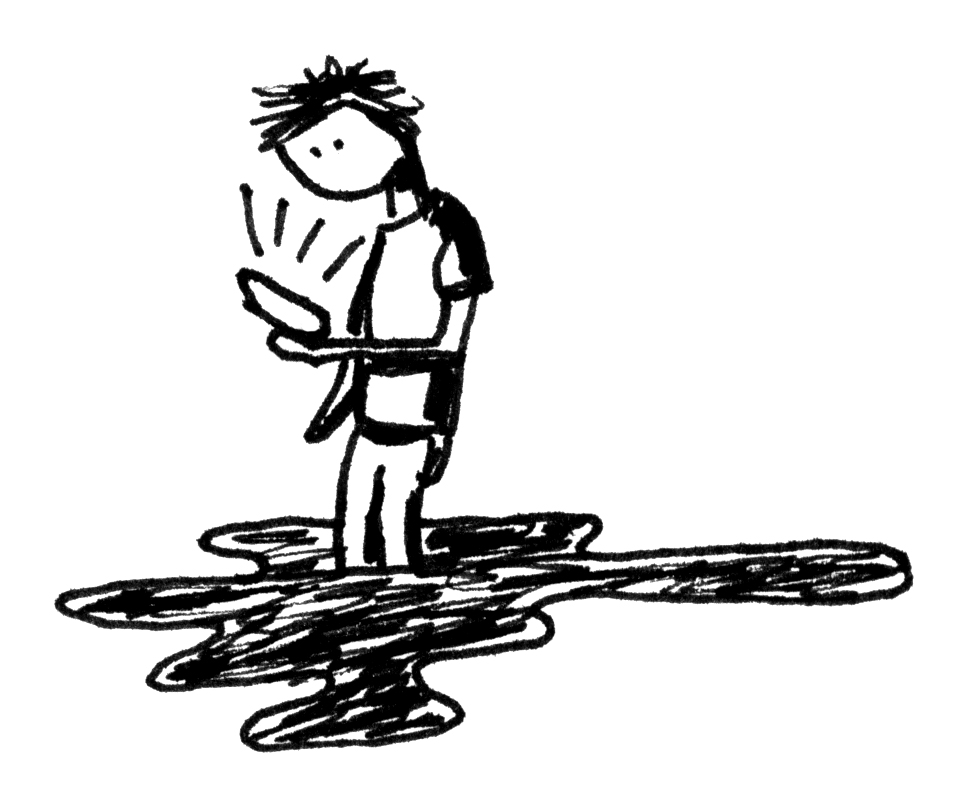
Story and Doodles by Justin “Scrappers” Morrison // @scrappers

Before I was brainwashed and trained to consume. Before I became a human cash crop feeding a greed-based economic system. Before I became the leading cause of climate change. Two-hundred-fifty-two million years before I made my first mistake, a mass extinction happened. Like most of the five mass extinctions, this one was caused by carbon in the atmosphere. It warmed the planet by five degrees and killed 97 percent of life on Earth. As a typical middle-class consumer, I am adding that same amount of carbon to the atmosphere, and I’m doing it 10 times faster than the last extinction. I’m trying to kill myself.

Why am I doing this? Honestly, I’m not sure. I’m trying to understand as I write these words to you. My lifestyle is killing my planet and ultimately killing you too. This is not a suicide letter, because I’m trying to snap out of this doomed slumber that’s brought me to the edge of extinction. At some point I stopped thinking for myself: I got in line, learned to get intoxicated, allowed fake people on screens to tell me what to want, grew into a lifestyle that ignored the impact each step I took left on Earth, beyond Nature’s bounty and the sort of common sense built into my personal wildness. 

I am trying to break free from this deadly lifestyle. I know I’m not alone. I know you try. I hear you talk about growing kale in your garden, but you still buy frozen pizza from the mega-market. I see the frustration and hypocrisy with ourselves. We are not perfect, but we can make progress. I’ve learned that we hit bottom when we stop digging. Let’s raise our heads up out of this consumption pit we’ve dug and get back to a lifestyle that isn’t suicidal.


Problem/Solution #1

Transportation Emissions

I need to walk, bike, and use mass transit when I travel, or limit my total travel. My fossil fuel-powered transportation lifestyle gives off CO2 emissions, which is the leading cause of global warming, and global warming is the leading cause of extinction. The Environmental Protection Agency (EPA) reports 60 percent of CO2 emissions from transportation are from sports utility vehicles like trucks, vans, and other “adventuremobiles.” This is a big pill to swallow, but if I love the environment so much I need to stop driving and flying so much.

30% of the CO2 emissions Killing our Planet are from U.S. Transportation 

(Info Source: EPA, Fast Facts: U.S. Transportation Sector GHG Emissions. 5 pp, 407 K, EPA-420-F-18-013, July 2018)


Problem/Solution #2

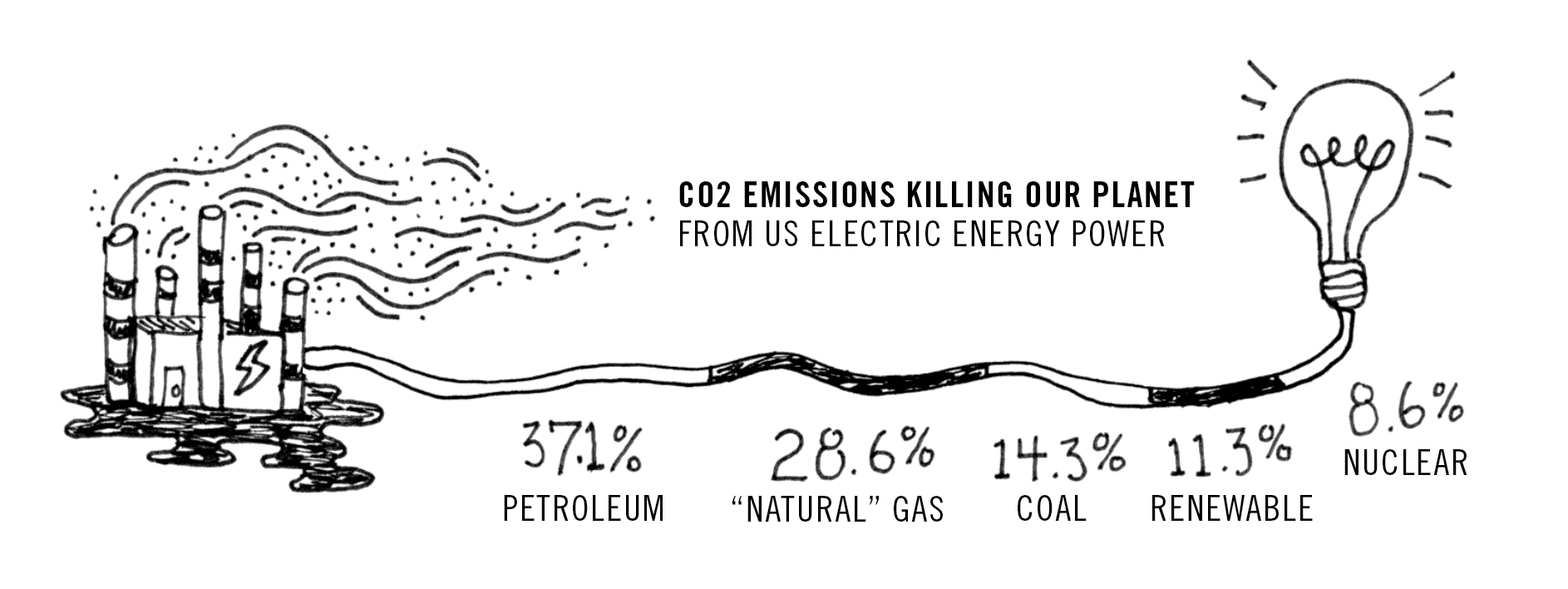
Dirty Electricity

I need to stop using dirty electricity. About 30 percent of CO2 emissions come from generating electric power mostly used at home. Hawai’i primarily burns diesel fuel to generate electric power, and most other states burn coal, “natural” gas, and nuclear nonsense. So even if I drive a 100 percent electric car across Texas, if I’m charging my phone at a gas station while hiking the Appalachian Trail, if I’m toasting a bagel in Wyoming...I’m still killing the planet with dirty electricity. 

So how do I stop? Some baby steps would be to turn the lights off when I’m not using them, entertain myself with a book rather than a screen, dress (or undress) for the temperature while inside rather than using the heater or air conditioner, turn the water heater temperature down, and so on... A bigger step would be insisting on paying more for renewable solar and wind energy. 

What’s an even bigger step? Take a few steps backwards, evolutionarily. I don’t mean go full caveman, but maybe I could sleep when it’s dark and do my work when it’s light. My work could be more about chopping firewood and recharging the electric batteries with a stationary bike generator… Rather than my work hours being spent standing in the social media tarpit like a bored animal waiting for extinction.  

(Source: EPA, Inventory of US Greenhouse Gas Emissions Report 1990-2017.)


Problem/Solution #3

Make Love, Not Babies!

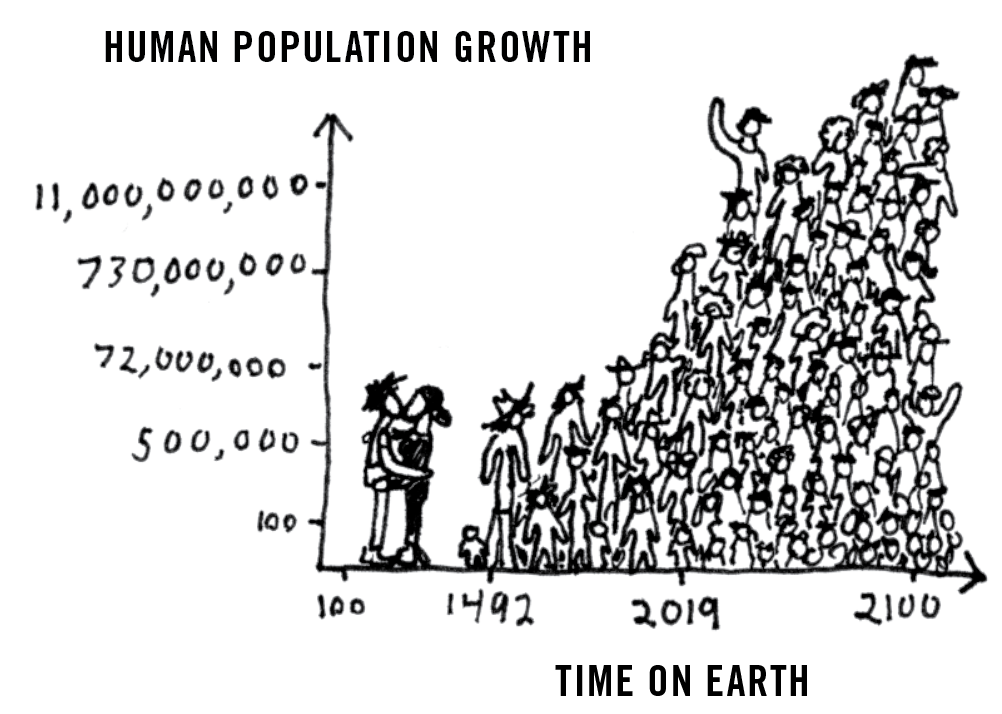
Right now, our planet’s human population is over 7.3 billion. According to United Nations predictions, we could reach 9.7 billion people by 2050, and over 11 billion by 2100. Scientists think our planet can only support 9-10 billion people. So what happens when we go over that number?

It sounds like wild apocalyptic science fiction, but the future I had is not here for my 10-year-old son. When he’s my age, the Earth’s human population will run out of natural resources. I’m talking about starvation, death by pollution, death by war, and very real enslavery to commercial agriculture. He will inherit our truly trashed planet and have to fight in real wars, killing or being killed by armed slaves to secure agricultural land and clean water for the big businesses that keep these slaves fed and protected. Thirty years from now, babies will grow to be slaves to a greed-based economic system. Heck, has it already happened? Is it happening to me? I am pretty “brand-loyal.”

You might be thinking, “But what if enlightened people like me stop making babies, but every other cash-crop human zombie keeps getting preg-o-rante?” Welp, if you’re so enlightened, maybe get over yourself and adopt a baby instead of adding to the population problem. Or, at the very least, try to practice safe sex, limiting human footprints on our planet as it runs down the road, puttering on gas fumes, right off the cliff of extinction.

(Source: United Nations, World Population Prospects, 2015 esa.un.org)


Problem/Solution #4

Look at the Real Price Tag

I’m such a brainwashed consumer zombie that I don’t even look at the price tag of most things I buy, and I totally don’t look at the ecological price. If I was brave enough to look at the true price tag, I’d see the amount of trash, deforestation, water pollution, or fossil fuels burned to move the things I buy.

I need to look at the waste I’ve created with each purchase. The third-largest contributor to CO2 emissions, following the United States and China, is food waste that adds up to 3.3 billion tons of CO2 a year. This much goes into making and moving food that becomes trash! New Rule: I can’t leave the table until my plate is clean, or even better, I’m going to put less on the table. 

I need to avoid single-use packaging by reusing containers. That means going to the store with more than a canvas bag. I need to bring reusable bags for bulk oatmeal and beans, reusable bottles for soap and peanut butter refills, and containers and utensils for lunch from the hot bar (I’m looking at you, vegan mac and cheese).

I need to look at where things come from. For example, the palm oil in my cookies, candy, toothpaste, and snacks comes from commercial agriculture operations that are deforesting the Amazon rainforest. That means I’m personally responsible for the extinction of animals and people. I’m only looking at the flavor options on the label. I need to look at the deeper realities of what I buy.

(Food Waste Fact Source: Food and Agriculture Organization of the United Nations,

Food Wastage Footprint on Natural Resources summary.

Palm Oil Fact Source, Rain Forest Action Network, ran.org)


Change, or Die!

I need to rethink my lifestyle. Most “things” I do cause pollution: traveling, shopping, eating, making love, and even chilling out watching TV. So here are some lifestyle changes I’m going to practice more:

Screen Shot 2019-07-18 at 4.29.47 PM.png

A Floating Revolution

Stay Wild

Portland’s wettest protest party

Story by Justin “Scrappers” Morrison
Photos courtesy of Human Access Project

IMG_8769 (1).jpg

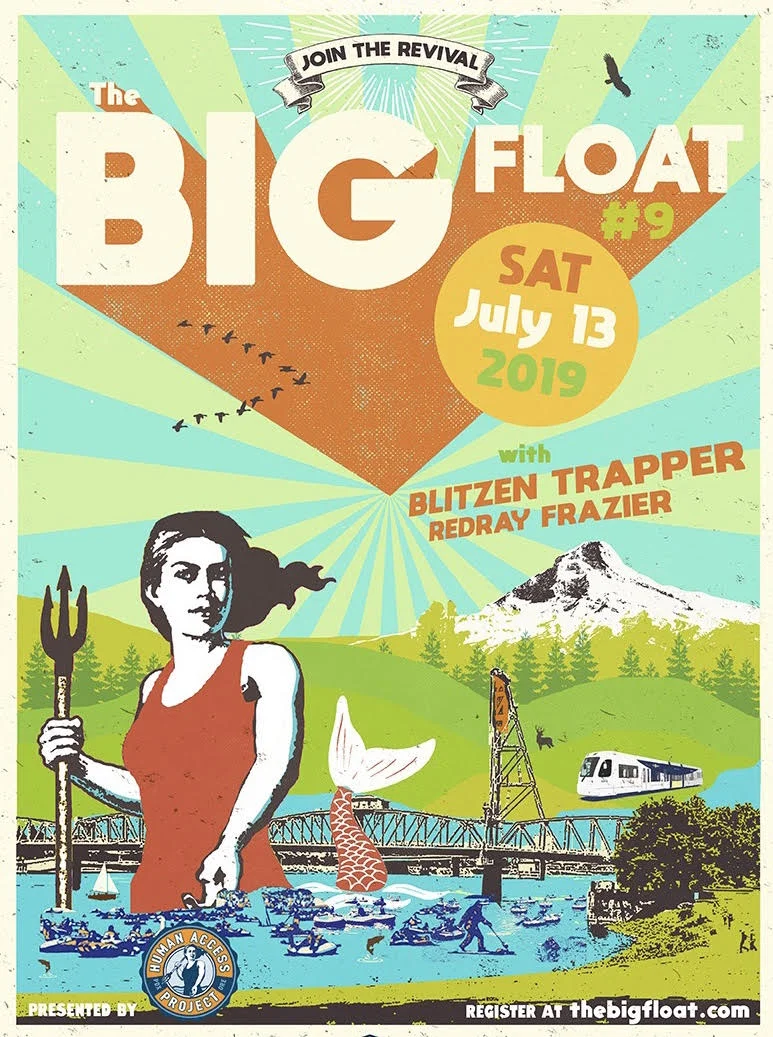
There is a revolution floating through Portland Oregon. Some call it a “Riverlution”. Most call it The Big Float. Every summer since 2010 a vibrant rainbow of people and inflatable animals have been gathering on the shores of the Willamette to float on the idea that Portland is actually in love with it’s river and all the life it sustains, including mermaids!

IMG_8305 (1).jpg

“I am a sucker for mermaids! We see lots of mermaids at the float,” says Willie Levenson, Ringleader of Human Access Project (HAP) who organizes The Big Float. The HAP mission is to, “transform Portland’s relationship with the Willamette River.” Willie’s goal is to challenge people about how they feel about and relate to the river, and looking to connect them through active recreation, so more people will care for its health. All waterways that flow through a city have the reputation of being filthy for good reason. Urban runoff, sewage overflows, and industrial pollution are real things especially in the Willamette. However, the water is safe to swim in, especially in the summer months when we don’t get much rain. The simple act of jumping onto an inflatable swan and floating with some mermaids down the river is a form of protest against the perception that it’s polluted and not fit for fun.

The Big Float is only one way to change the river’s reputation. HAP does events like the Mayoral Swim, the Portland Beach Bash and Clean Up, the Valentine’s Day Dip, and has helped create access to actual swimming beaches like Poet’s Beach. Willie says, “This year HAP is opening Portland’s second official swimming beach Audrey McCall Beach [Psst...next to the floating dock near the Hawthorne bridge]. Portland’s first official eastside swimming beach. We privately fundraised to pay for the lifeguards - a portion came from proceeds from The Big Float.“

Our city is only as good as our citizens. All this work being done to love our river back to life is only happening because of our volunteer efforts and the funds being donated. Registration for The Big Float is only $5 through July 7th, $15 at the door.. Heck, if you’re experiencing abundance donate more money. Any effort you make goes towards making the river more accessible for people.

Willie and all the other volunteers are working to change the river’s reputation and it’s a hard thing to measure. Yet it’s happening, “After nine years of work I can tangibly feel the conversation changing.”

The Big Float

Saturday, July 13th, 10am-6:30pm

Register today and mark your calendar!

Registration is only $5 through July 7th and $15 at the door. 

Expert floaters hit the Wristband Pickup Party on July 7th 5-7:30pm to save time with entering the float.

IMG_8166.jpg

Need more reasons to go? Check these out:

March in the parade at: 1pm

Floating Stage Shows by Blitzen Trapper, Redray Frazier, and PERK Portland Grooves

Food carts, beverages

Changing rooms and check-in for valuables

Chair massages

Fun for kids

// BONUS RESON TO GO //

To help bring more attention to The Big Float we’re releasing our Summer 2019 issue at the event. Swing by the Stay Wild booth to grab new & old issues for free!

Stay Wild  Summer 2019 cover.jpg