Hello

We're chin deep in the work of getting this magazine ready to share, if you want to get involved contact us with the form on the right (if you like forms).

If you're into contributing pictures, video, music, words, secret maps, and that kind of creative adventure stuff email: [email protected]

If you're into booking ads, making ad-like content, setting up meetings, and that sort of stuff email: [email protected]


123 Street Avenue, City Town, 99999

(123) 555-6789

[email protected]


You can set your address, phone number, email and site description in the settings tab.
Link to read me page with more information.

News

Break Free

Stay Wild

Van Lifers in the Alvord Desert

Story by Lexi Smith & Cody Cheng // @dynamoultima

Photos by Suzie Gotis // @suziegotis
Gotis_Suzie_StayWildKeen_6336.jpg

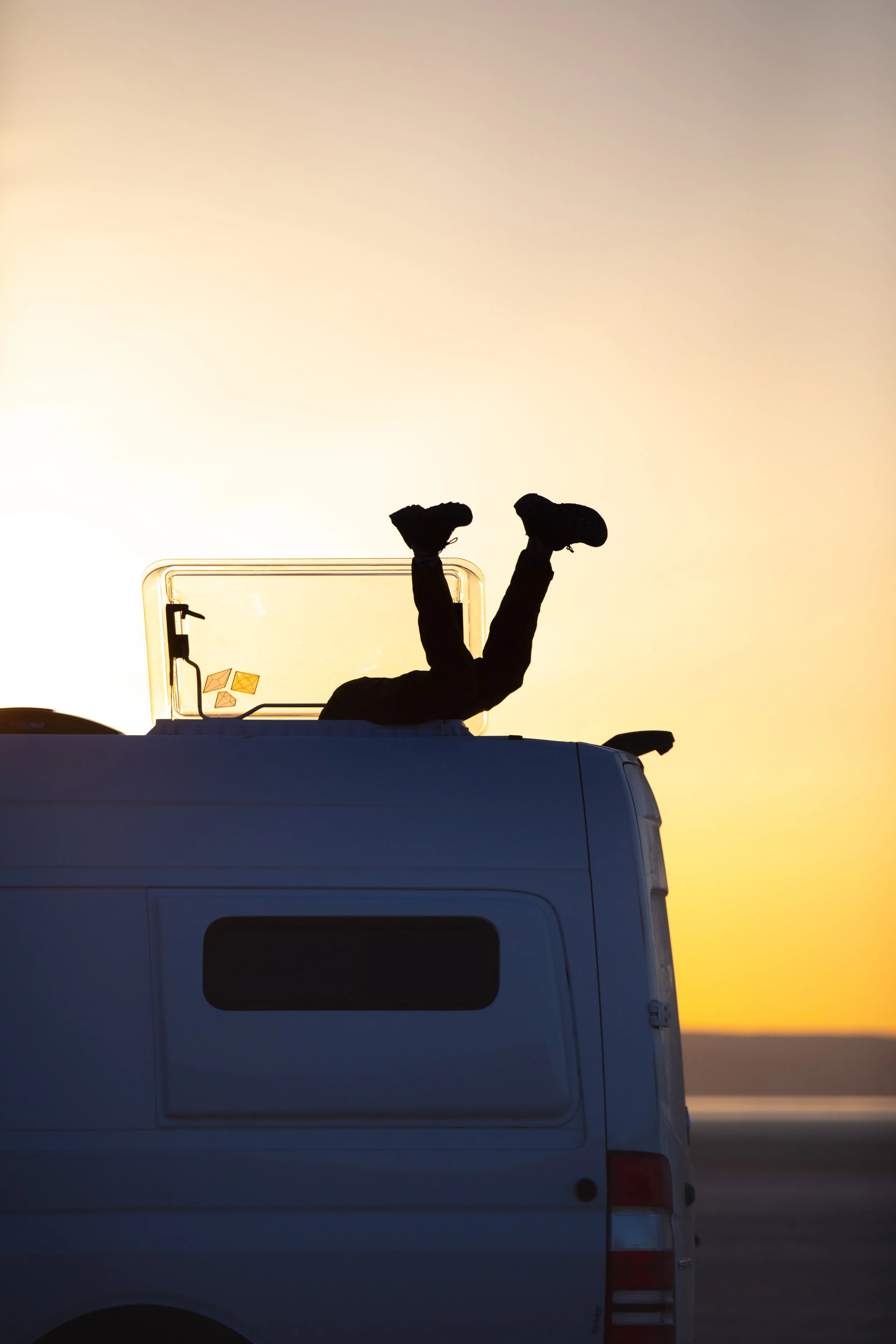
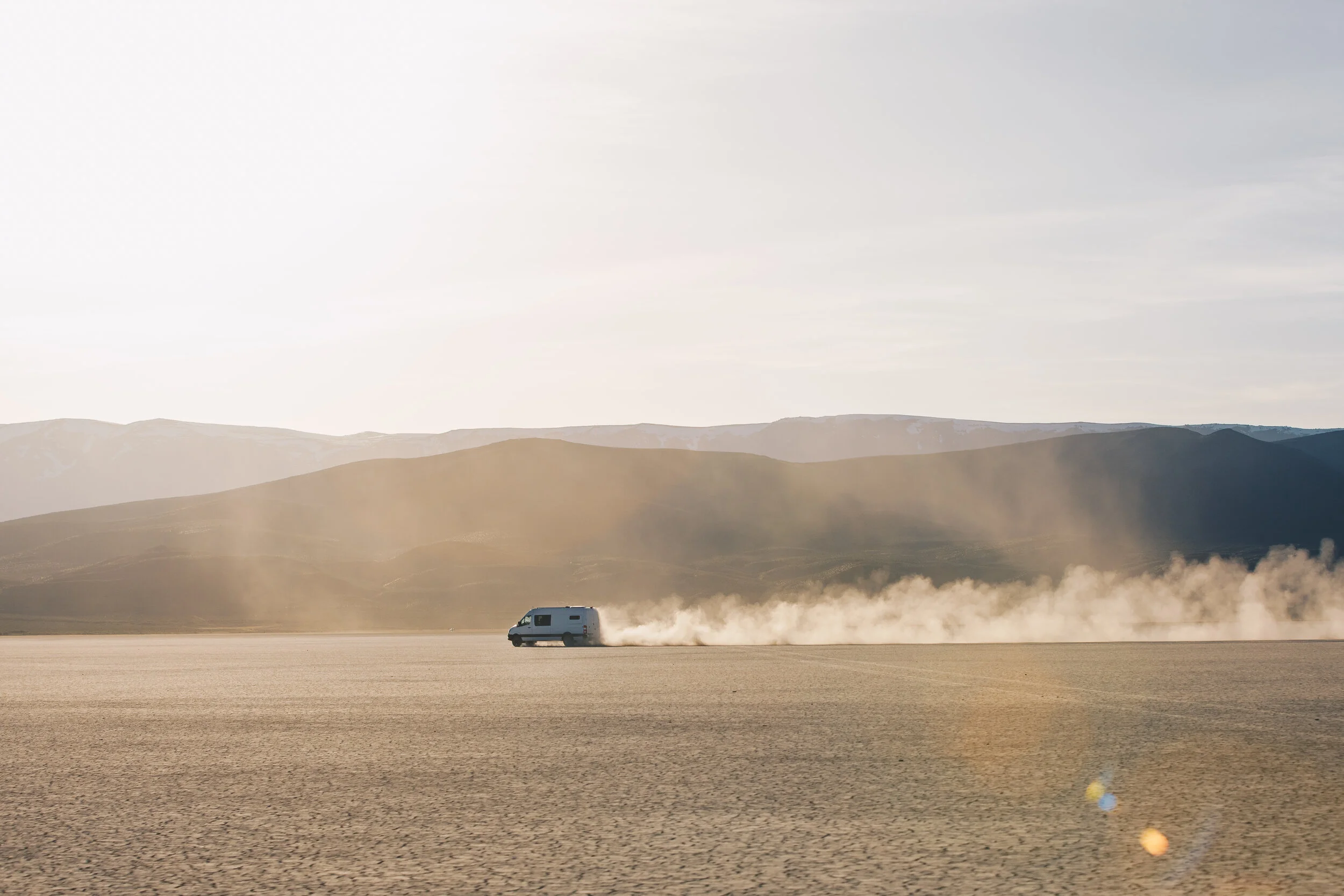
For some, driving seven hours to a remote area seems like an impossible feat, especially if you’re camping. There’s a lot of setting up to be done and many precautions to make. But a van can make the adventure much more feasible. All we needed to do was pack was ourselves, some beer, and snacks, then hop in and go. 

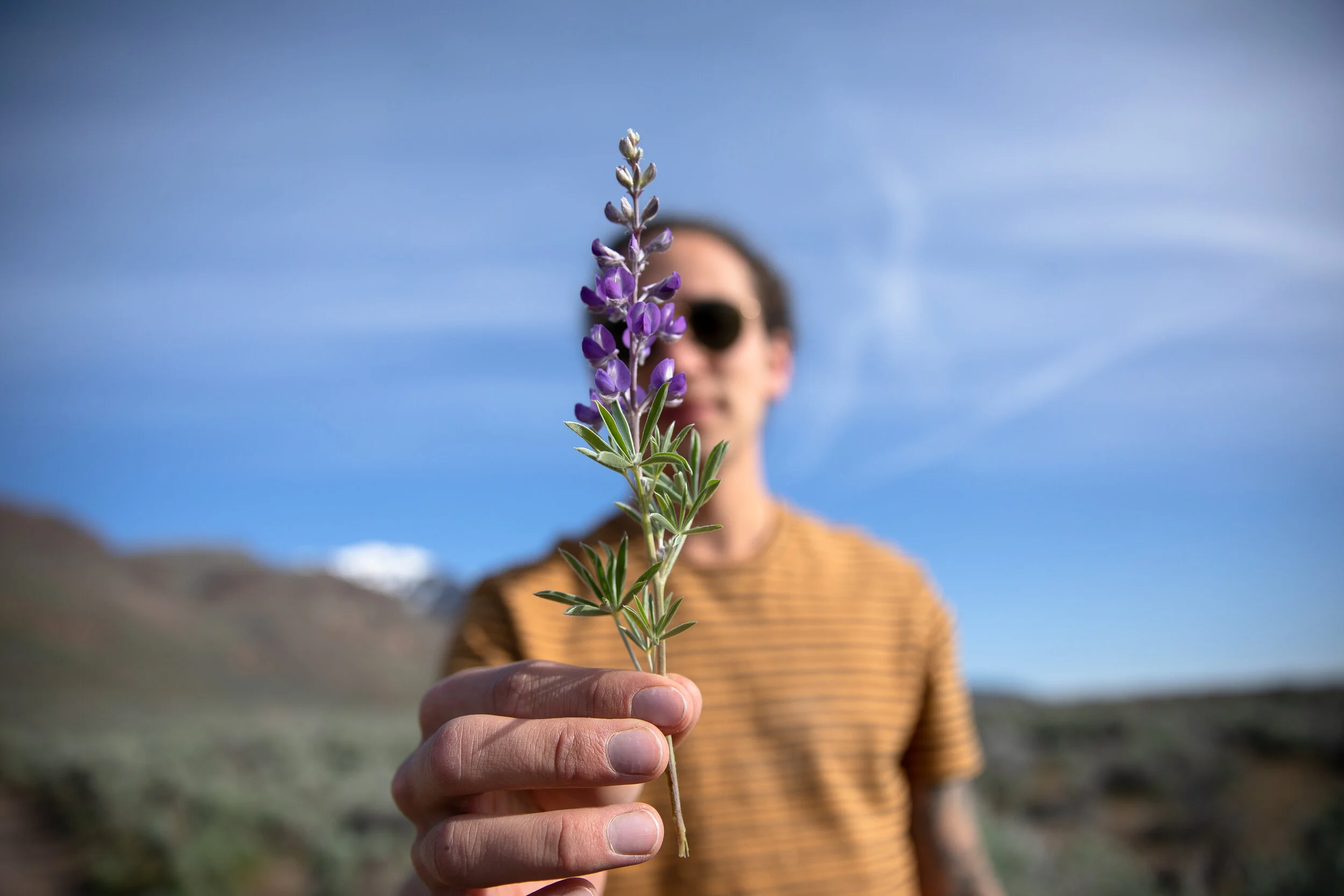
On our drive, we were greeted by a beautiful mountain range. We’ve lived in Oregon the last 28 years, but were shocked to have never heard of the Steens Mountain range. 

We continued down a long, remote dirt road where stillness and quietness filled our souls. Remote places allow us time to stop, time to live in the moment, time to leave our worries behind. We’re encouraged, in such spaces, to put our phones down and bear witness to this giant explorable earth which surrounds us.

Arriving at the Alvord Hot Spring, we met the amazing family taking care of the campground. We connected instantly as they toured our van. Driving down to check out the playa, we were blown away that we were still even in Oregon. 
Gotis_Suzie_StayWildKeen_5954.jpg

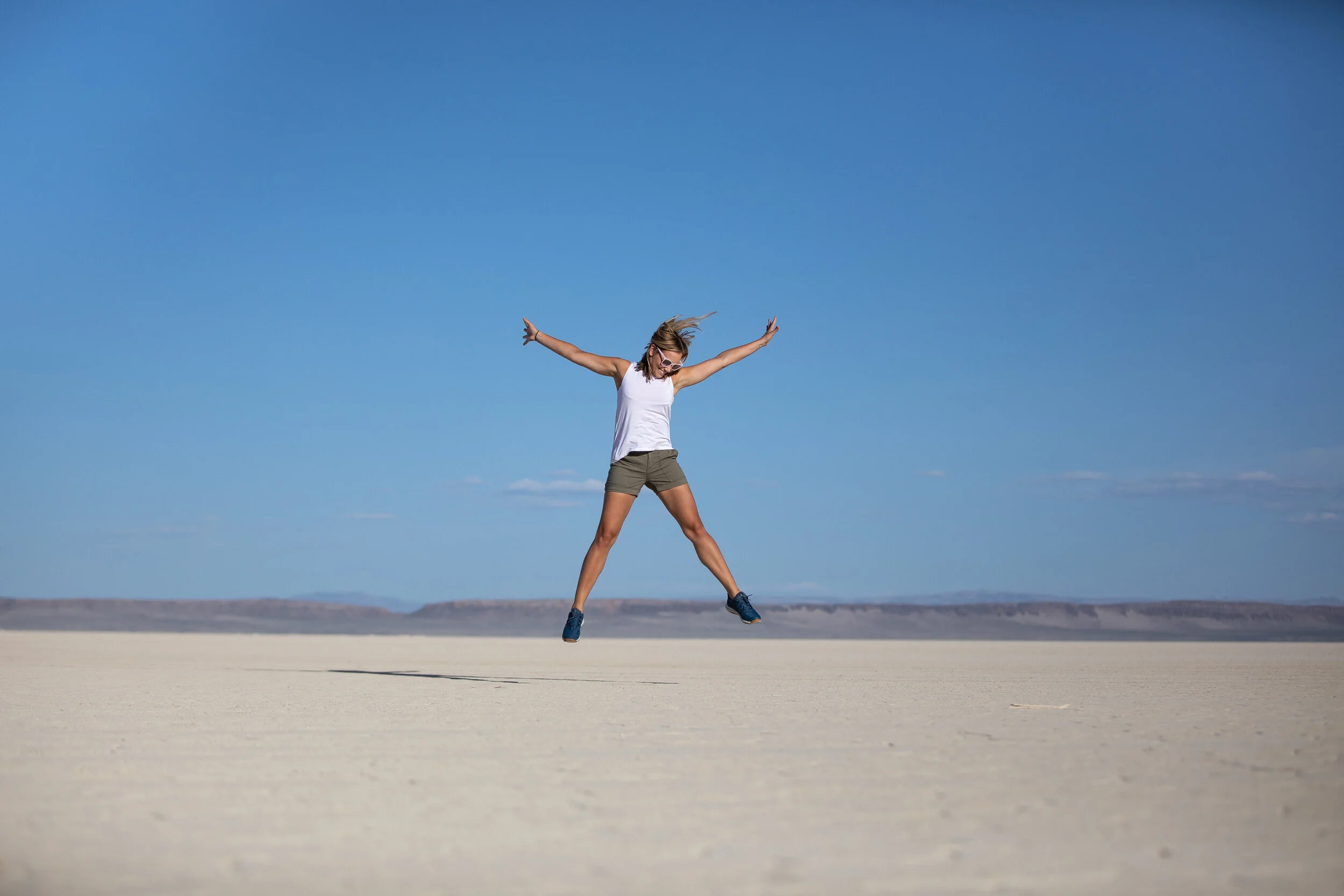
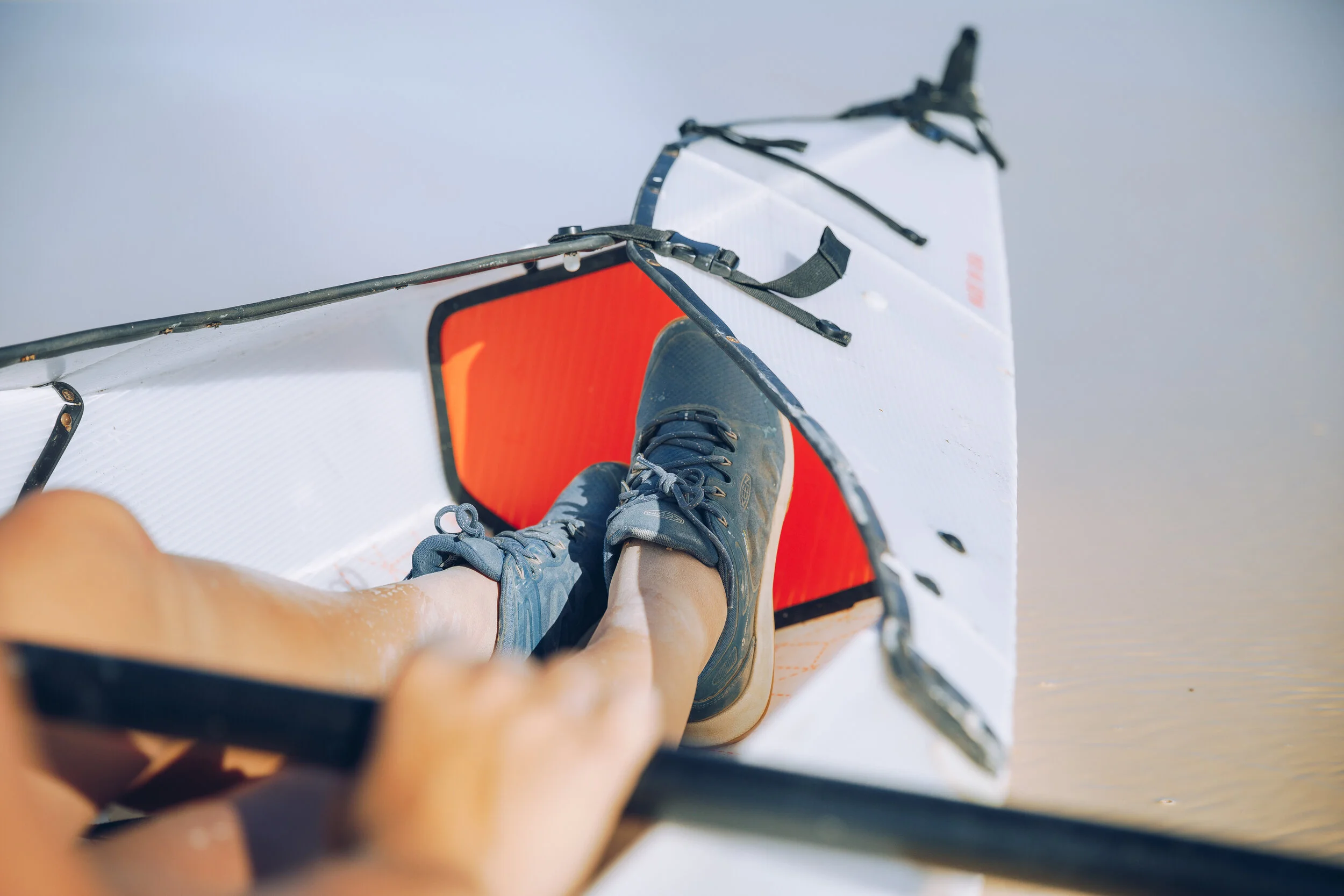
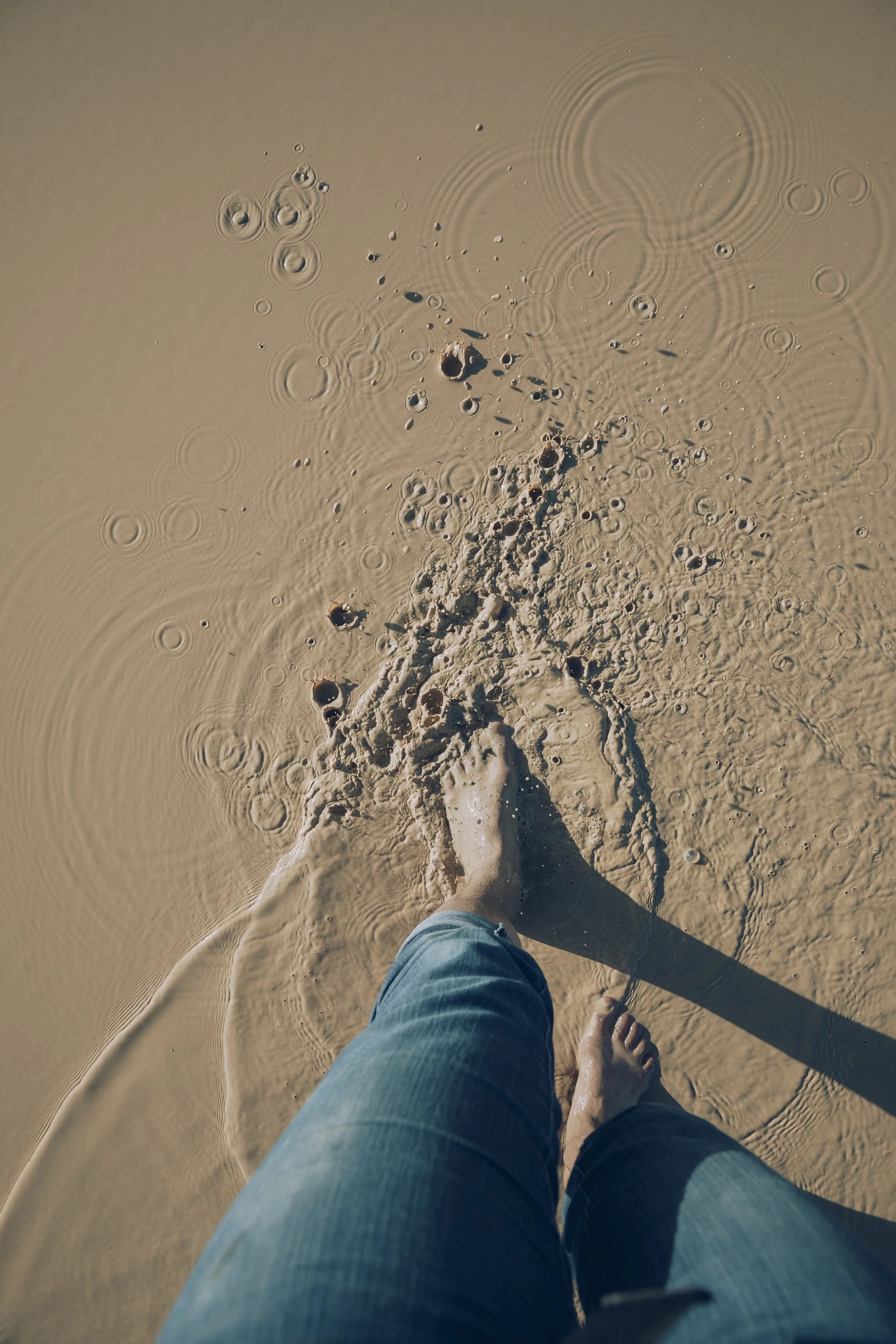
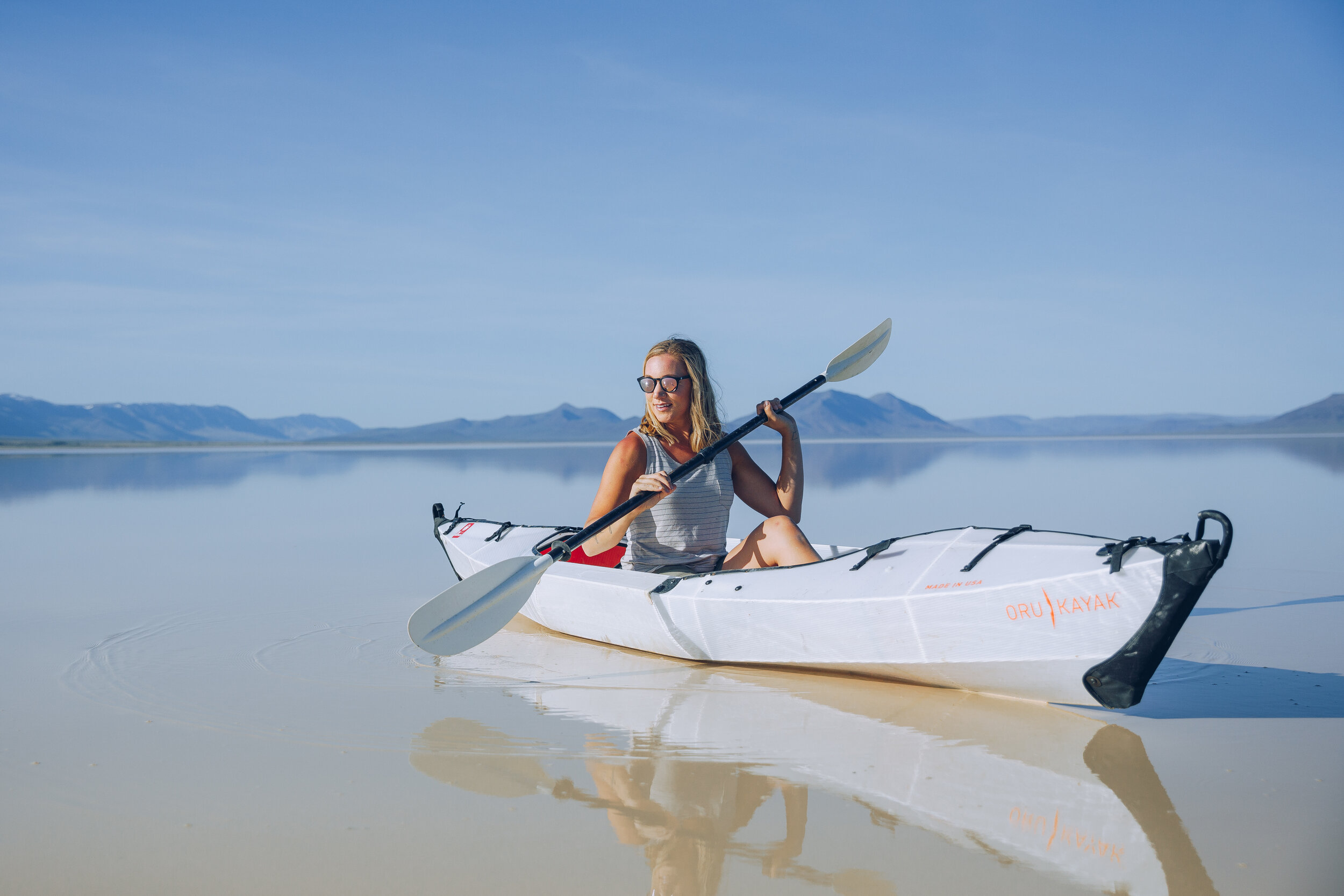
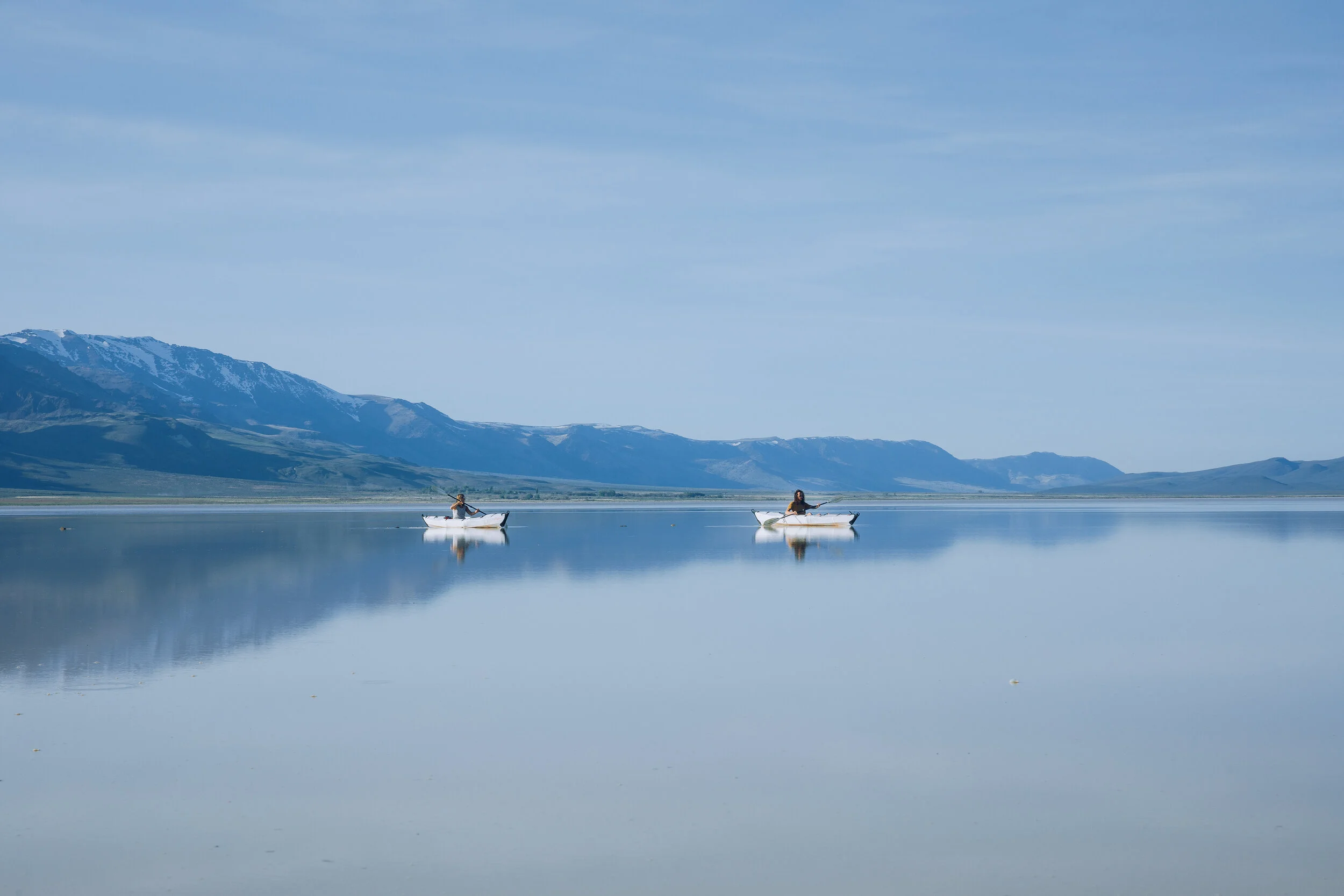
The playa went on beyond forever, moving around the desert with the flow of the wind. We brought kayaks but quickly discovered the lake was a mere couple of inches deep. But our fun couldn’t be stopped!

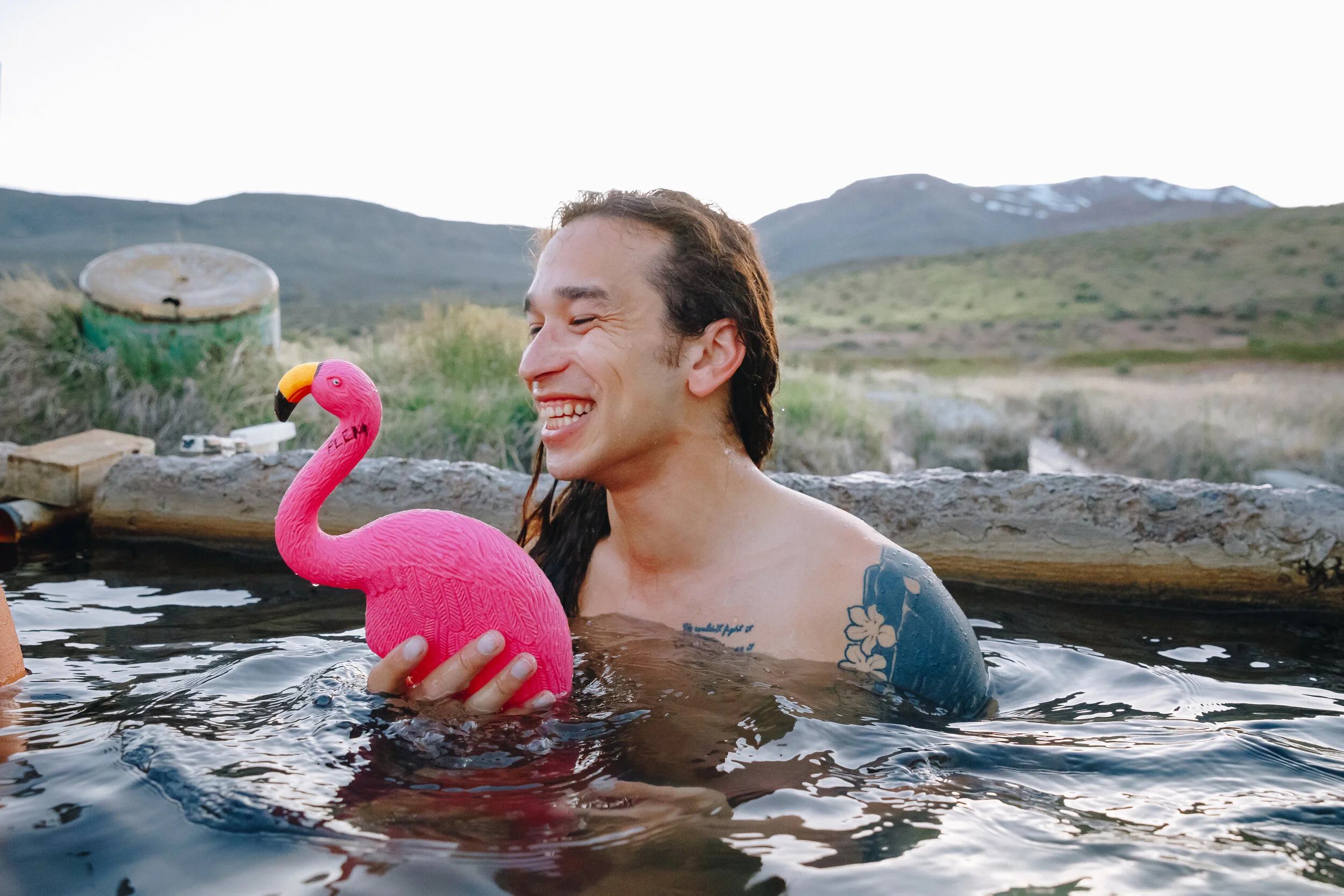
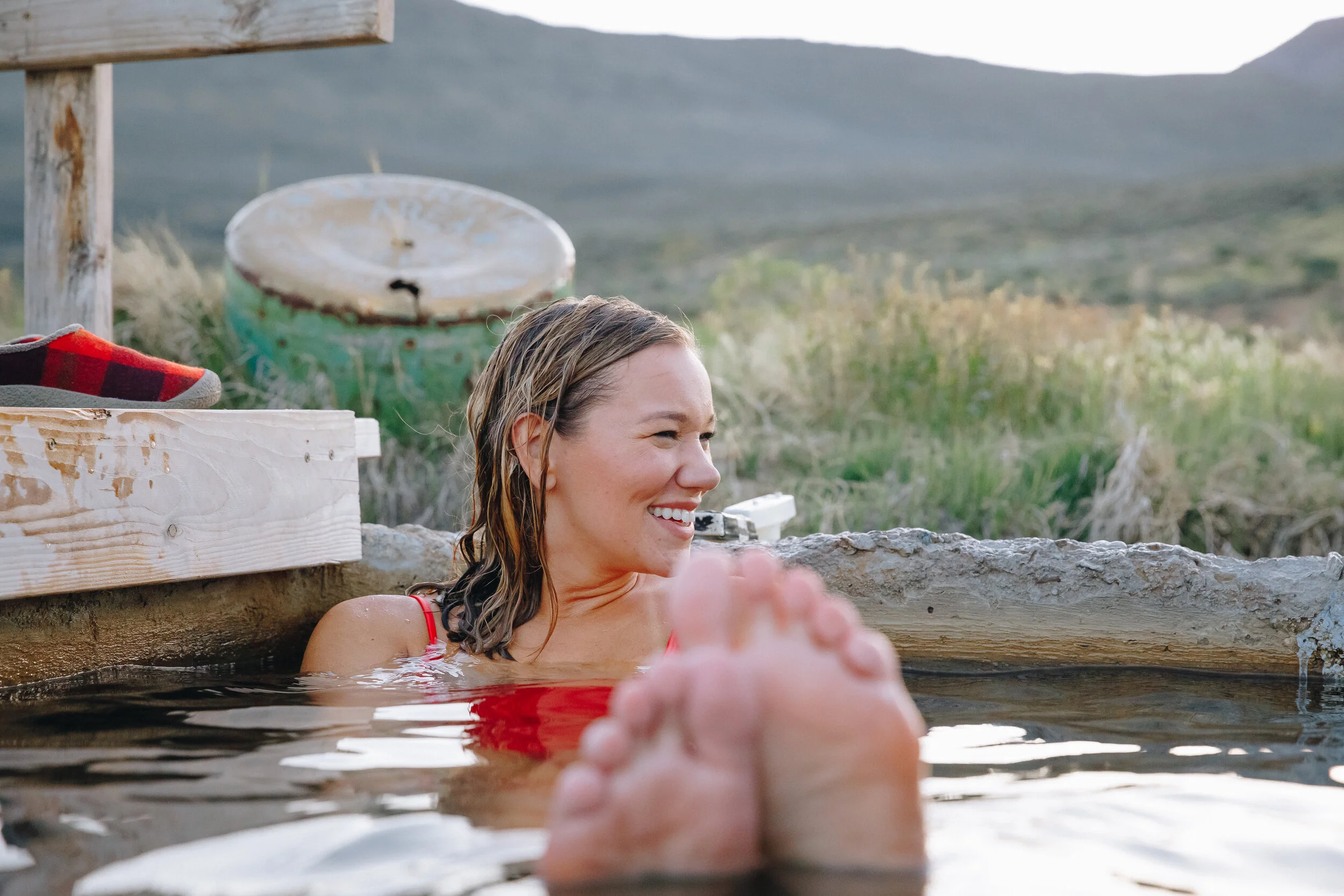
We spent the next few days running around the playa, spending hours in hot springs, and catching mosquito bites hiking in the Steens.

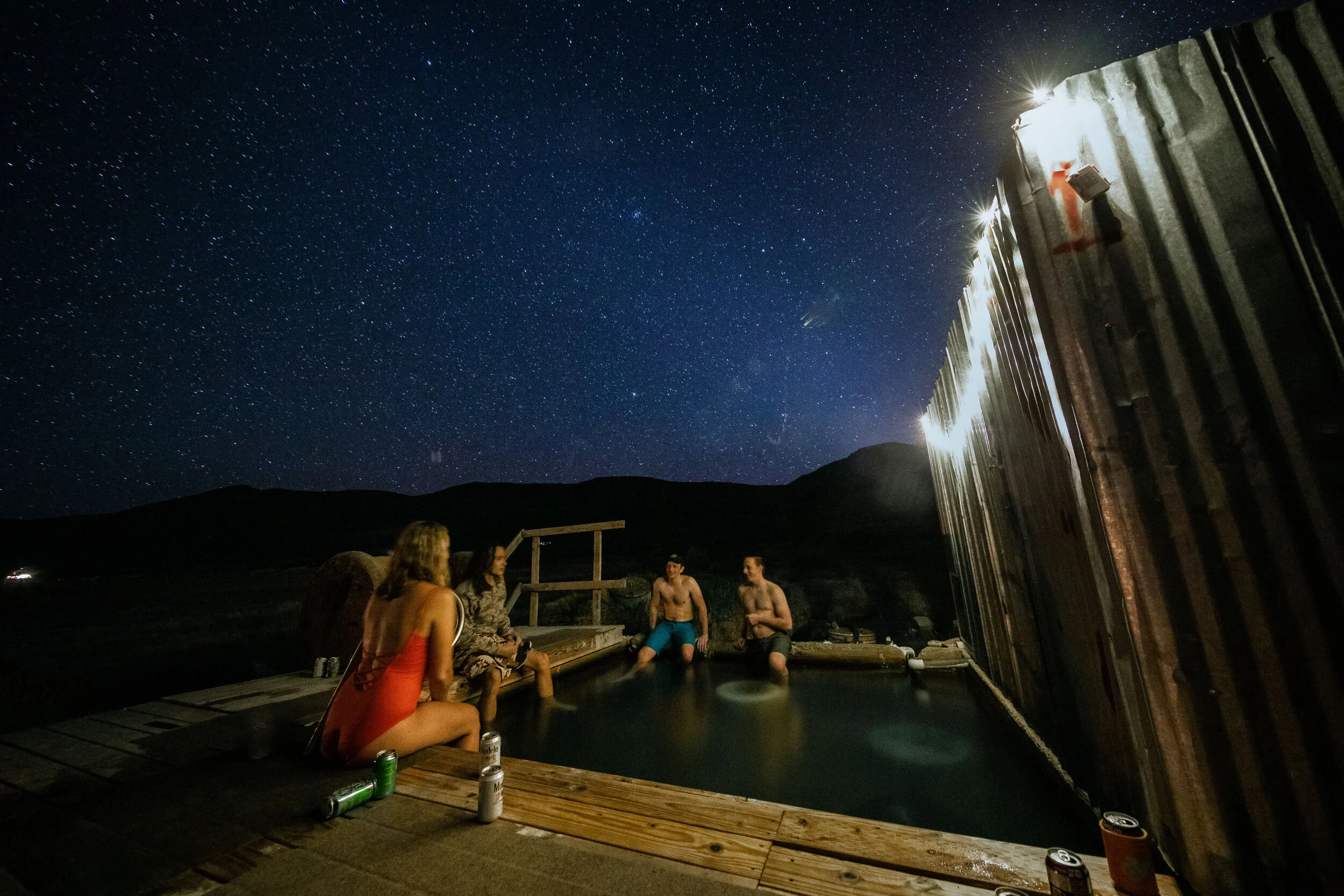
The last night, in the hot spring, someone mentioned that a meteor shower was happening. Being in the middle of nowhere during a new moon was the perfect opportunity to stargaze. We ran to the middle of the playa beneath the darkness. We played Hans Zimmer instrumentals. We sprawled out in a circle, looking to the sky, our heads touching one another. 

This was a moment to cherish, one that a camera phone could never capture. I now believe the most beautiful moments are happening right in front of us, that we need to give ourselves time to take it in and just BE.

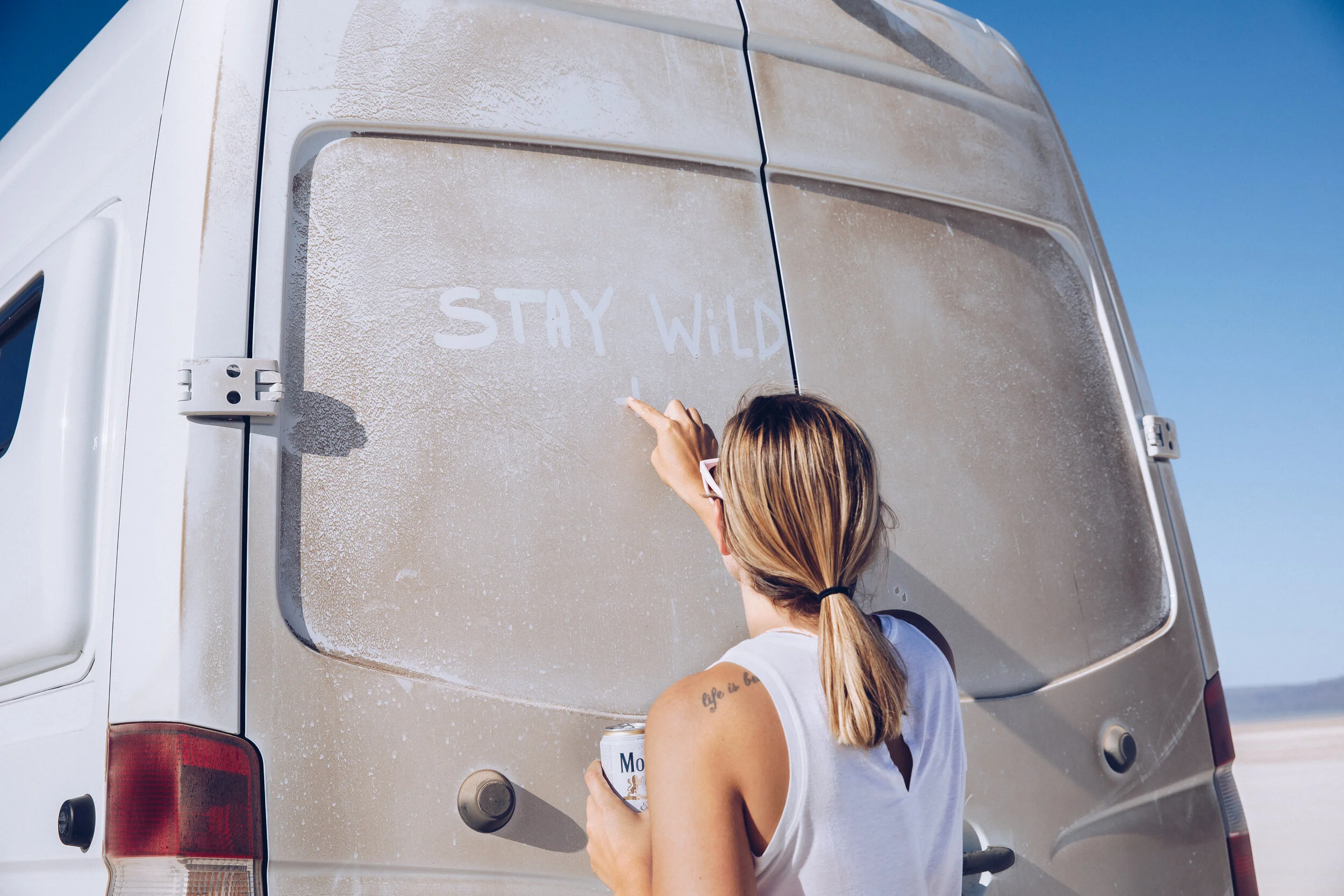
Back at our campsite, we packed up all of our things slowly, dragging with the sadness of this epic weekend’s end. That is until someone put on the song “Break Free” by Queen. We started dancing and running around the desert, breaking free from the expectations, worries, and stresses weighing us down. We cherished the moment one last time. 
Gotis_Suzie_StayWildKeen_5481.v2.jpg

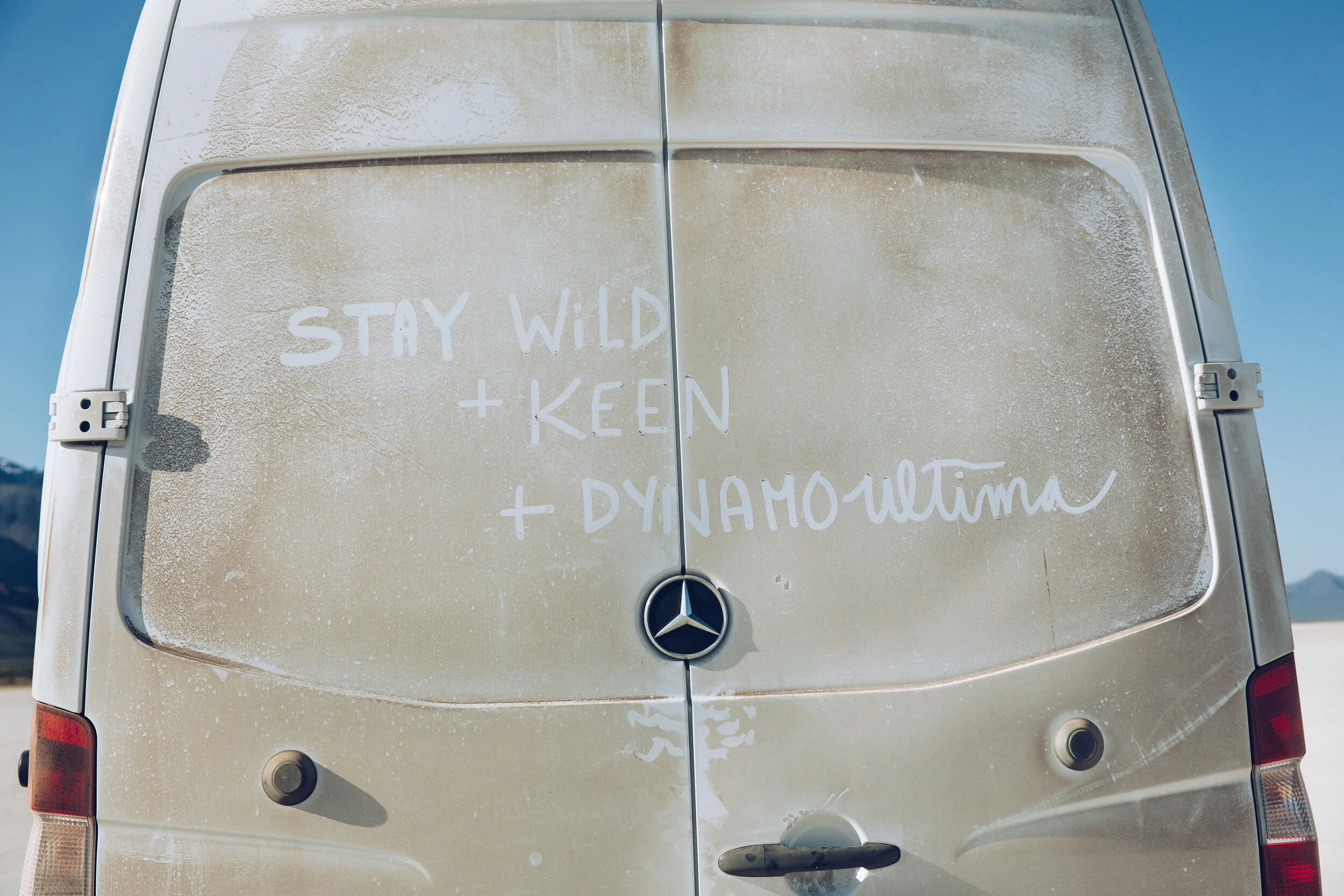
This adventure was made with Keen // keenfootwear.com
Portland's Handyman

Stay Wild

Meet the Legendary Leatherman

Story by Cameron Vigliotta // cameronvigliotta.com

Photos by Anthony Aquino // @anthony__aquino

In time, he finished the tedious job and handed me the Leatherman, instructing me to tuck it back into its case. I felt its cold, stainless steel build pass through my weeny hands as I studied the characters on its surface. Ruler markings lined its edges. “Leatherman Tool” was engraved on the side. Hesitantly, I placed it in the kitchen junk drawer amongst an assortment of tools and clutter; it was the very same catchall junk drawer that occupies space in most every American kitchen.

Years passed on and still my father’s Leatherman somehow managed to stick around. It was always rather loyal in that way. As his birthday approached only days beyond the new year, I strategized excitedly with my mother to buy him a new one. We sifted through the company’s multitool inventory before appointing the Leatherman Blast to become his latest everyday assistant. 

When the big day finally arrived, I handed him the new tool in its hallmark leather case. It was a serious upgrade over the previous model he’d used for so long, the Leatherman PST—the original Leatherman Pocket Survival Tool. I found myself excited by the notion that he’d have a new tool in his life, another everyday instrument that was sure to last a lifetime. Secretly, I found myself more excited knowing I’d inherit his old Leatherman.

And soon after, I did.

This reads like the story of so many that choose to welcome Leatherman into their lives. The narrative always manages to evoke the notion of heritage, family, and, perhaps, humble beginnings. I discovered Leatherman because someone else had one in their hands. And quickly I realized that I wanted one too, as so many of us do.

_98A3319.jpg

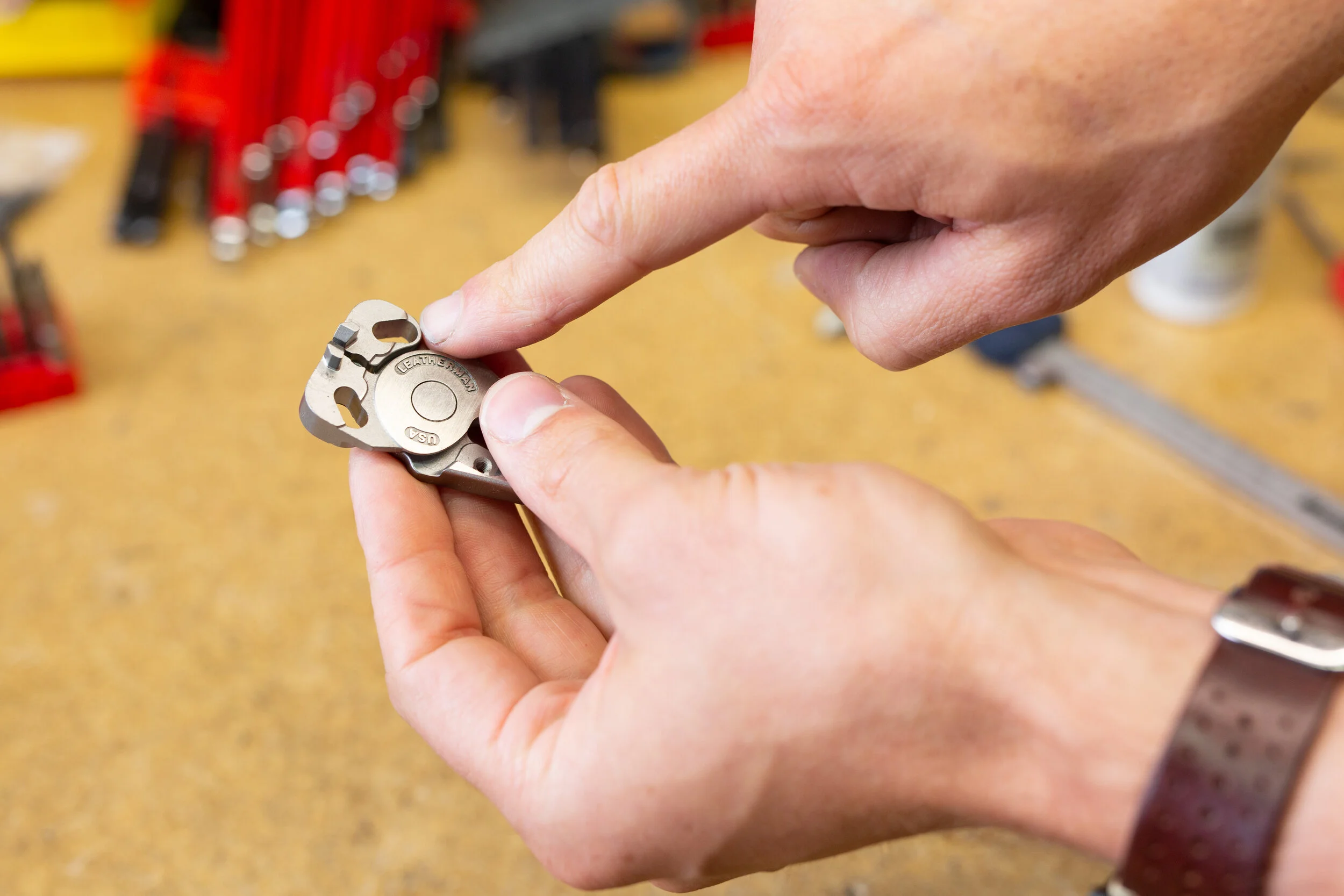
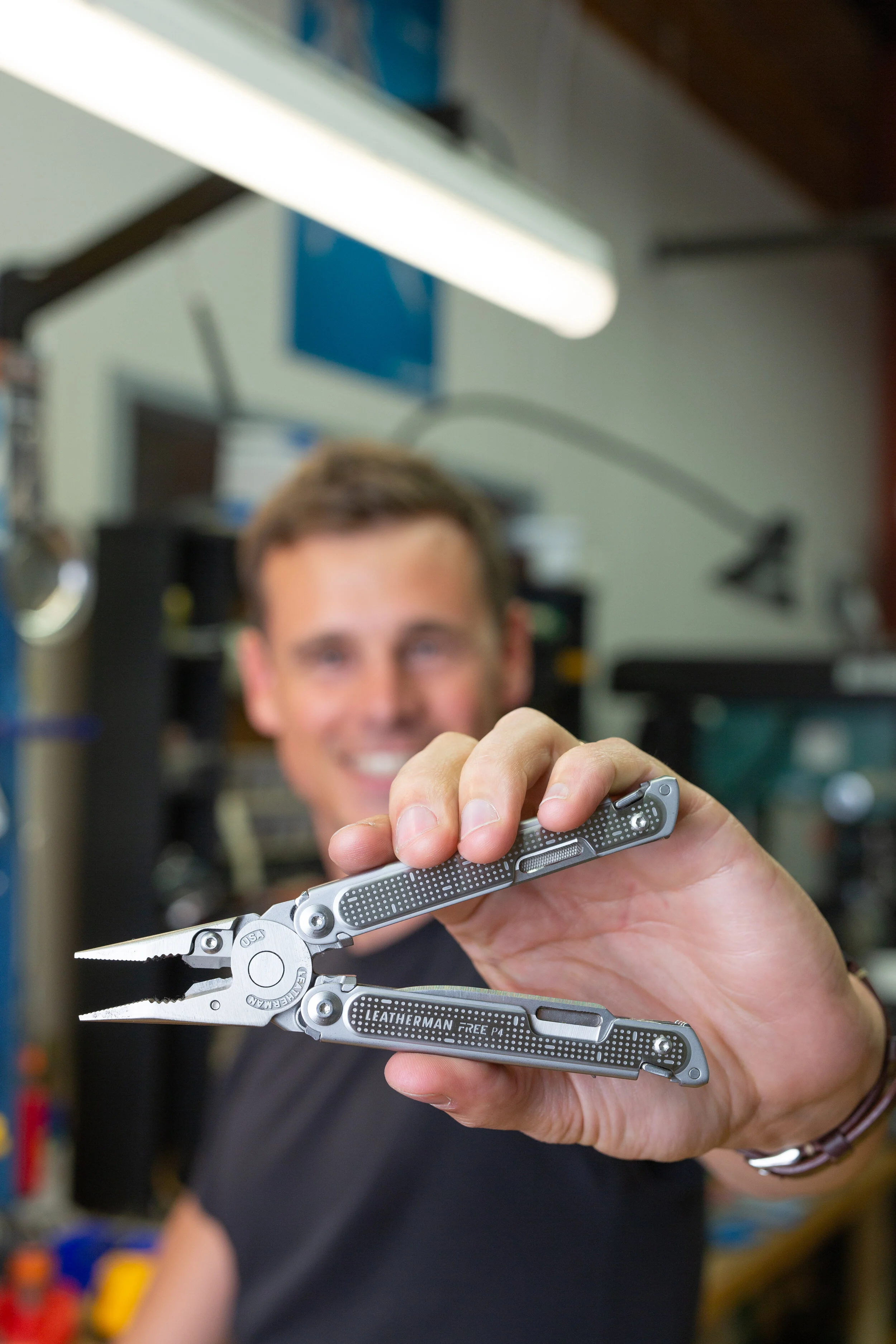
I think of that peculiarity as I sit across the room from Adam Lazenby, Leatherman’s head designer. In his hand is a gadget released only months ago as part of the company’s newfound multitool collection, the Leatherman Free series. Nine Free multitools have made the cut under his inquisitive eye. I notice the tool in his hand and again grow transfixed, just as I had so long ago.

“It starts to feel like my hand is better than it was before because it’s so effortless,” Lazenby says. “The whole thing is much more ergonomic.” In his hand, a Leatherman Free progresses through a series of clicks and snaps, each one firm and comforting as tools lock into place. The Leatherman moves with such ease and freedom that a quick glance might lead one to assume he’s fiddling with nothing more than a metallic fidget spinner. “If we can create a tool that is pleasant enough to touch that people will just naturally start playing with it, then we know we have succeeded,” he confirms.

But a single word from the, ahem, unfolding conversation seems to resonate with Lazenby more so than any other: freedom. I say that because Lazenby prides himself on freedom. At 36 years old, he lives with his family on a sailboat and bicycles to work each day, all in rather modest fashion. It’s a lifestyle he’s chosen to lead for a few years now. 

Before buying the boat, he and his partner lived life in a van. They did so if only to enjoy the present moment, and the moments to come. “We wanted to save money in a way that guaranteed adventure,” he says. “We really enjoyed that easygoing, free lifestyle of ‘if you want to have fun, just go.’”

When asked how he defines freedom, Lazenby pauses. I can see the gears turning as he ponders, searching for a simple response.“Freedom is being able to go until you choose to stop,” he answers rather stoically. “Choosing when and where to have an adventure without being hampered by logistics—that we can just up and go—there’s something incredibly beautiful about that.”

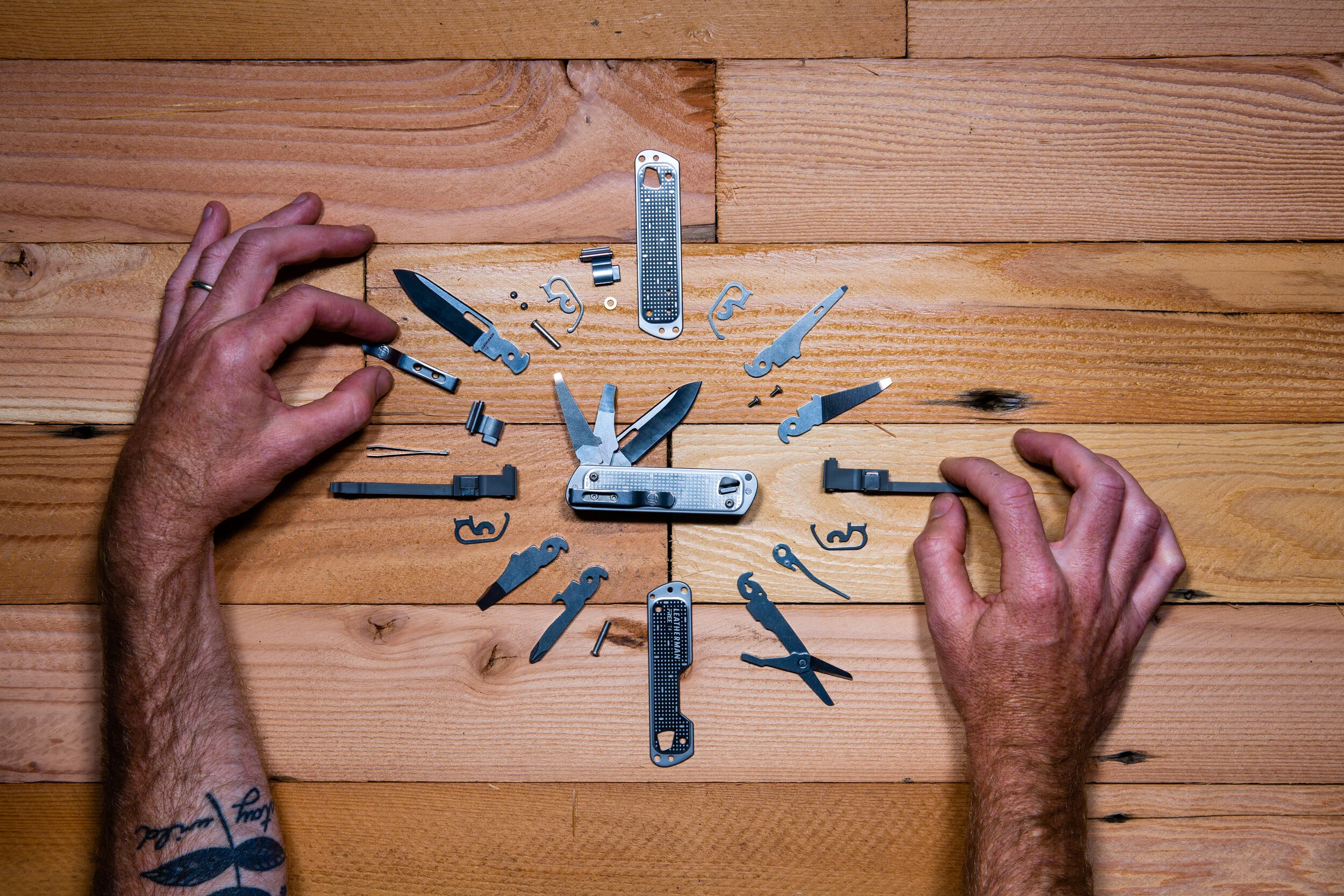
Perhaps only more compelling than Lazenby’s personal life is a lineage that can be traced from his perception of freedom to that of the Leatherman Free series, a project that took five years to bring to market. While the original Leatherman was famous for its butterfly design, everything you needed was on the inside, stowed away in hiding. With the Free series, tools now face out, removing the need to open the Leatherman simply to access one. With the flick of a thumb or push of a metal release, most any tool can now be opened with one hand, even without a fingernail. “When you have a problem, you can fix it,” Lazenby said. “There’s very little holding you back. It’s just right there, ready to go.”

_98A2576.jpg

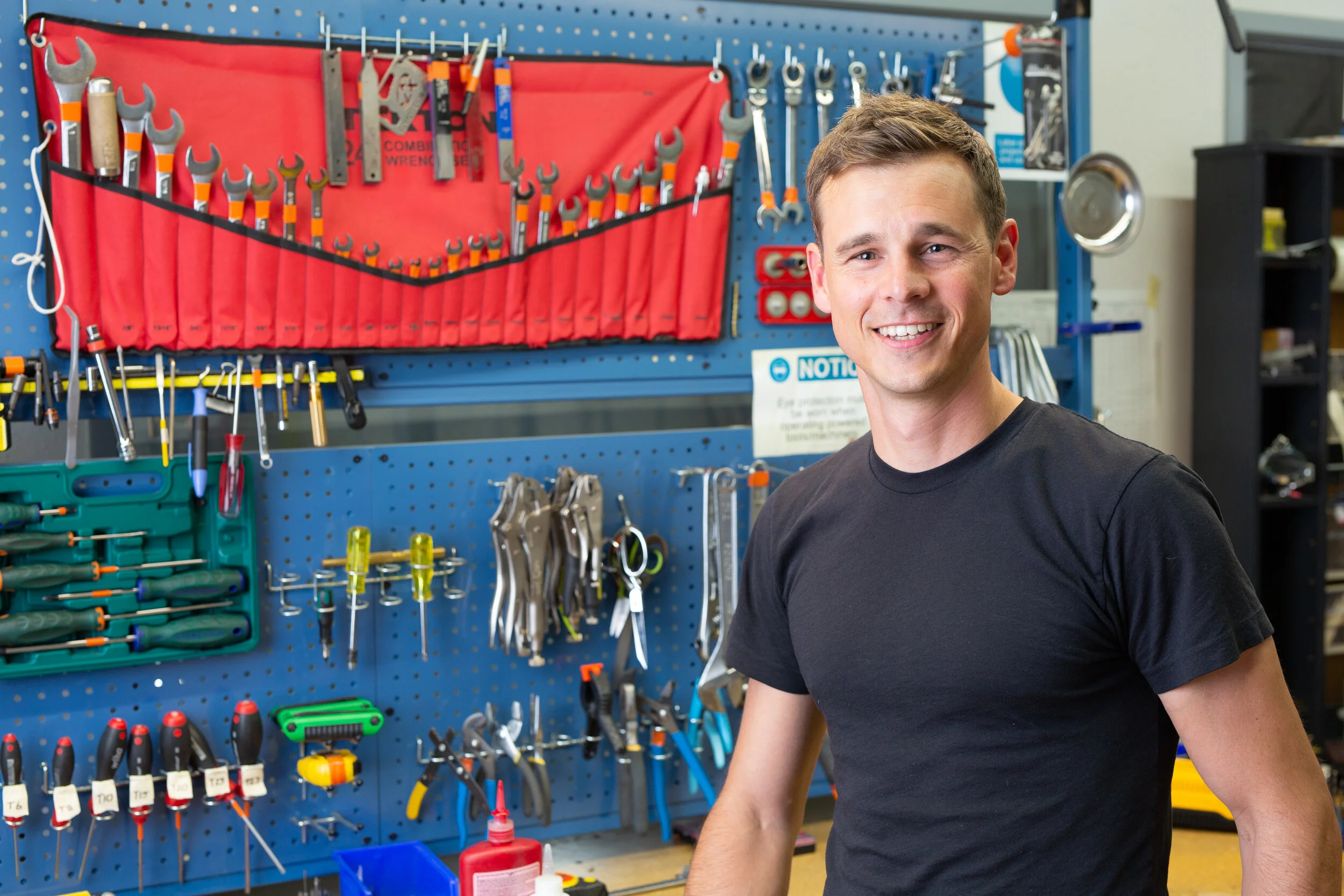
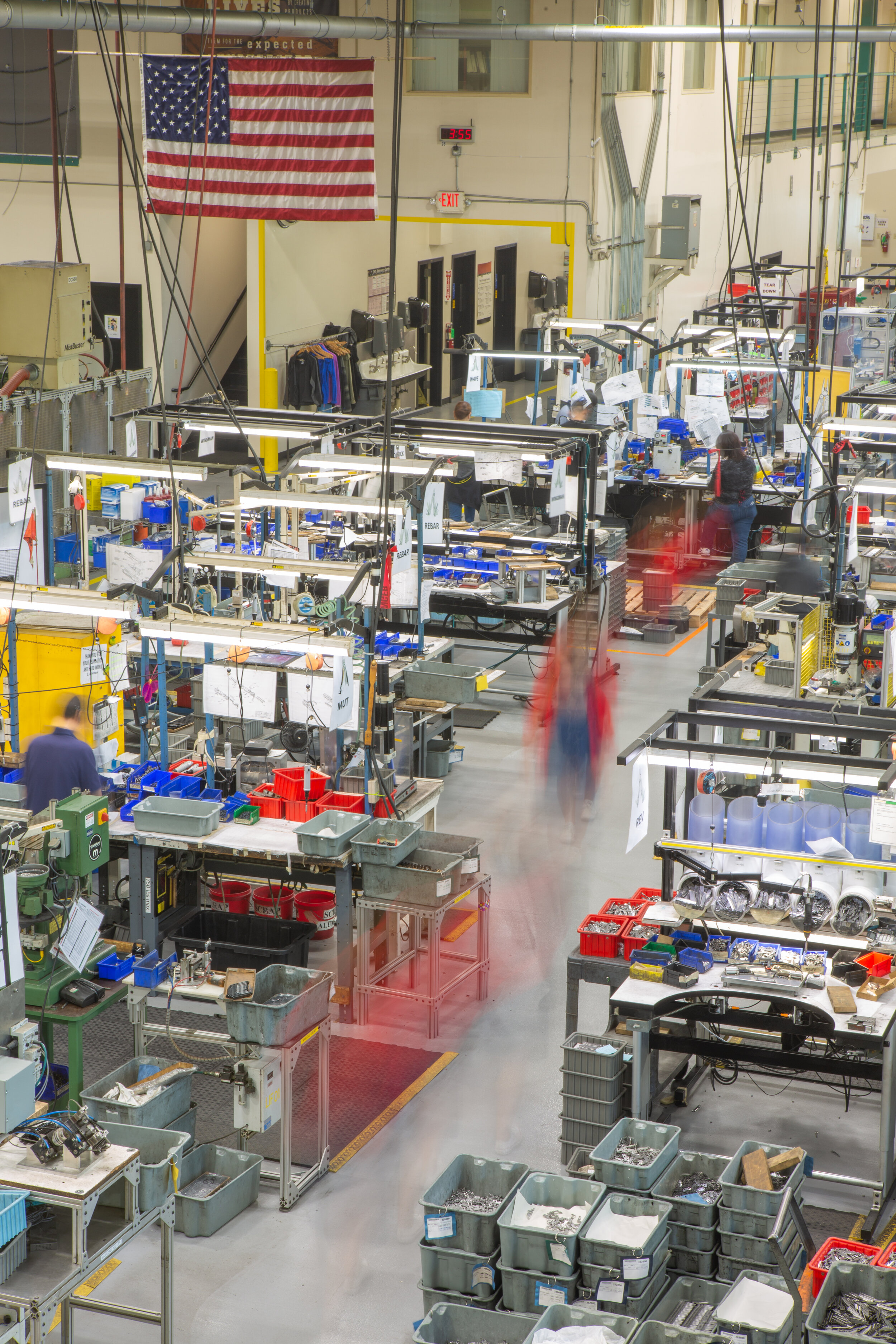
I walk down the hall towards a room nicknamed “the torture chamber.” Leatherman’s headquarters evoke a similar notion of freedom, simplicity, and small beginnings. Located unassumingly in Portland, Oregon, the company both designs and manufactures every Leatherman tool here from start to finish. Around the workplace, desks are covered in assortments of tools, both constructed and deconstructed. Some workbenches resemble Dr. Frankenstein’s laboratory bench over that of a modern day engineer’s. Parts from various Leatherman products are scattered in seemingly randomized fashion.

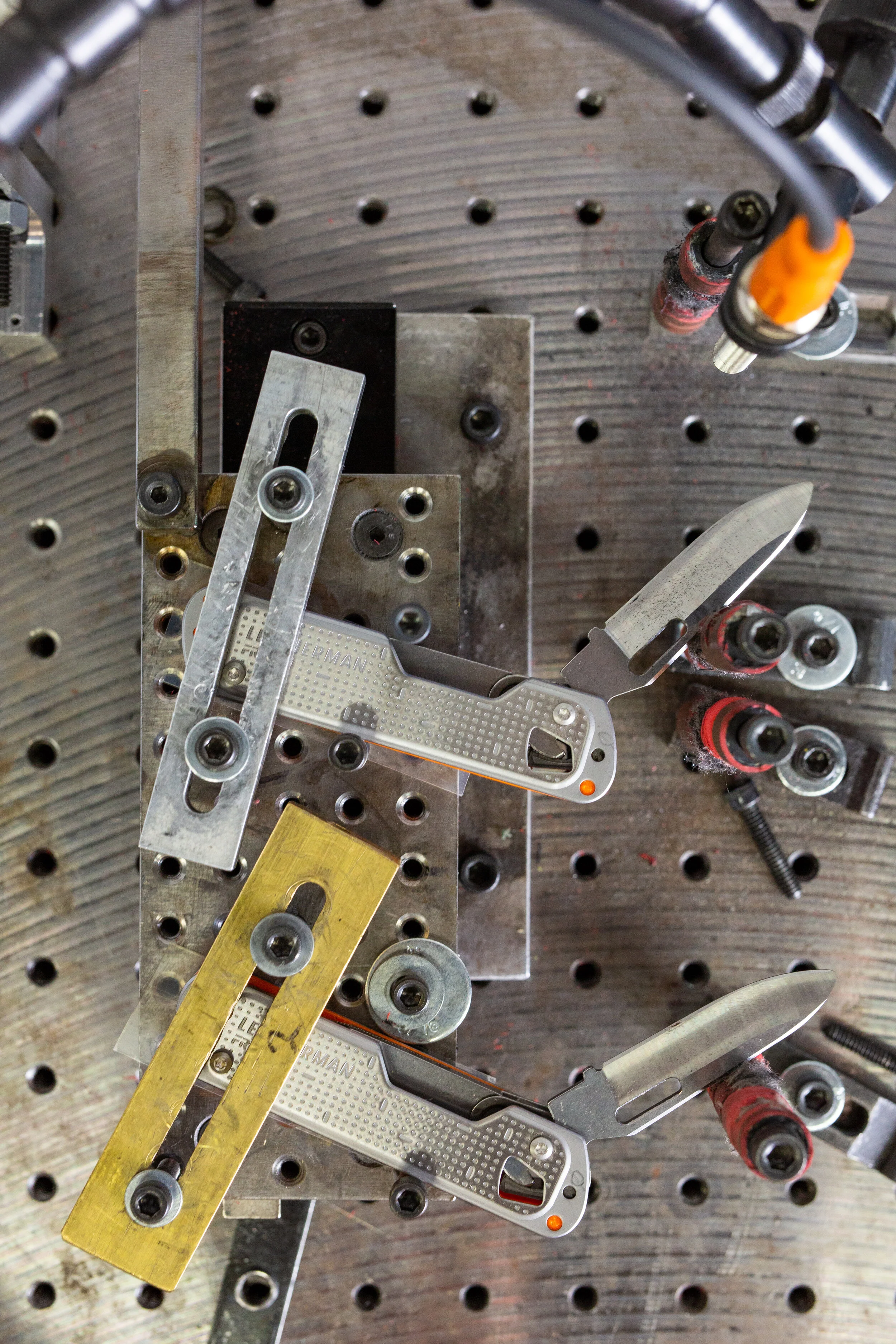
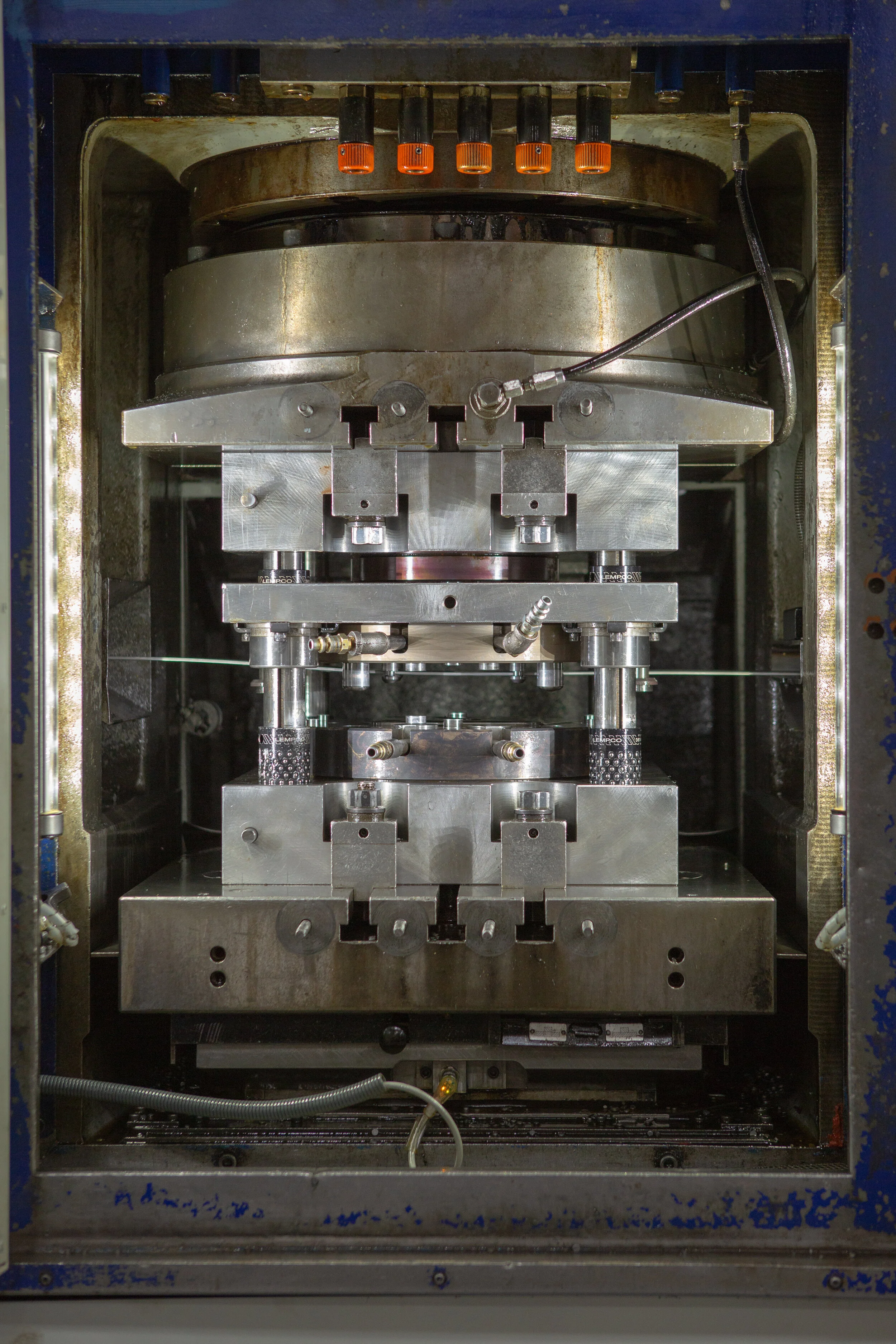
As we enter the product testing space, the rhythmic sound of pneumatic motors provides a soothing white-noise backdrop. Blades open and close thousands of times as engineers test the breaking point of every tool in every possible manner. A composite glass chamber that houses a hydraulic press is covered in scratches and nicks from Leatherman tools that are squeezed to the point of explosion. An oxidation rig exposes tools to years of moisture damage in a matter of hours or days. And buckets of defeated parts closely resemble a graveyard of tools that made the sacrifice to whatever better innovations come next.

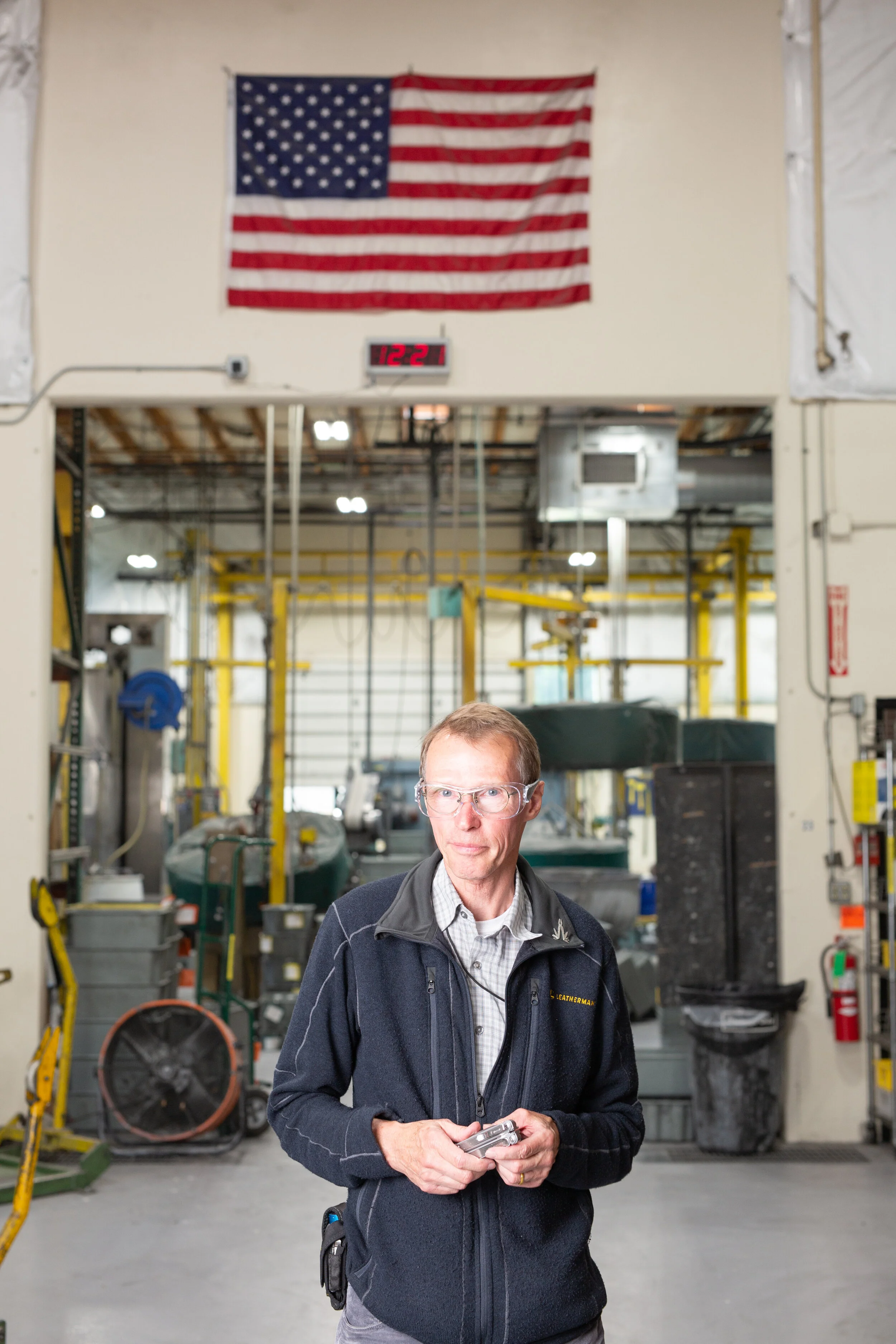
The sophisticated equipment dispersed throughout the open room captures the transformation of the Leatherman brand. When the company’s founder, Tim Leatherman, launched the first Leatherman tool in 1983, he did so with far simpler intentions. “There were often times where a pocket knife wasn’t quite adequate, and I also needed a pair of pliers,” recalls Tim. “I was jotting down notes, and one of the notes in essence said, ‘Add pliers to a pocket knife.’” And so he did.

_98A3164.jpg

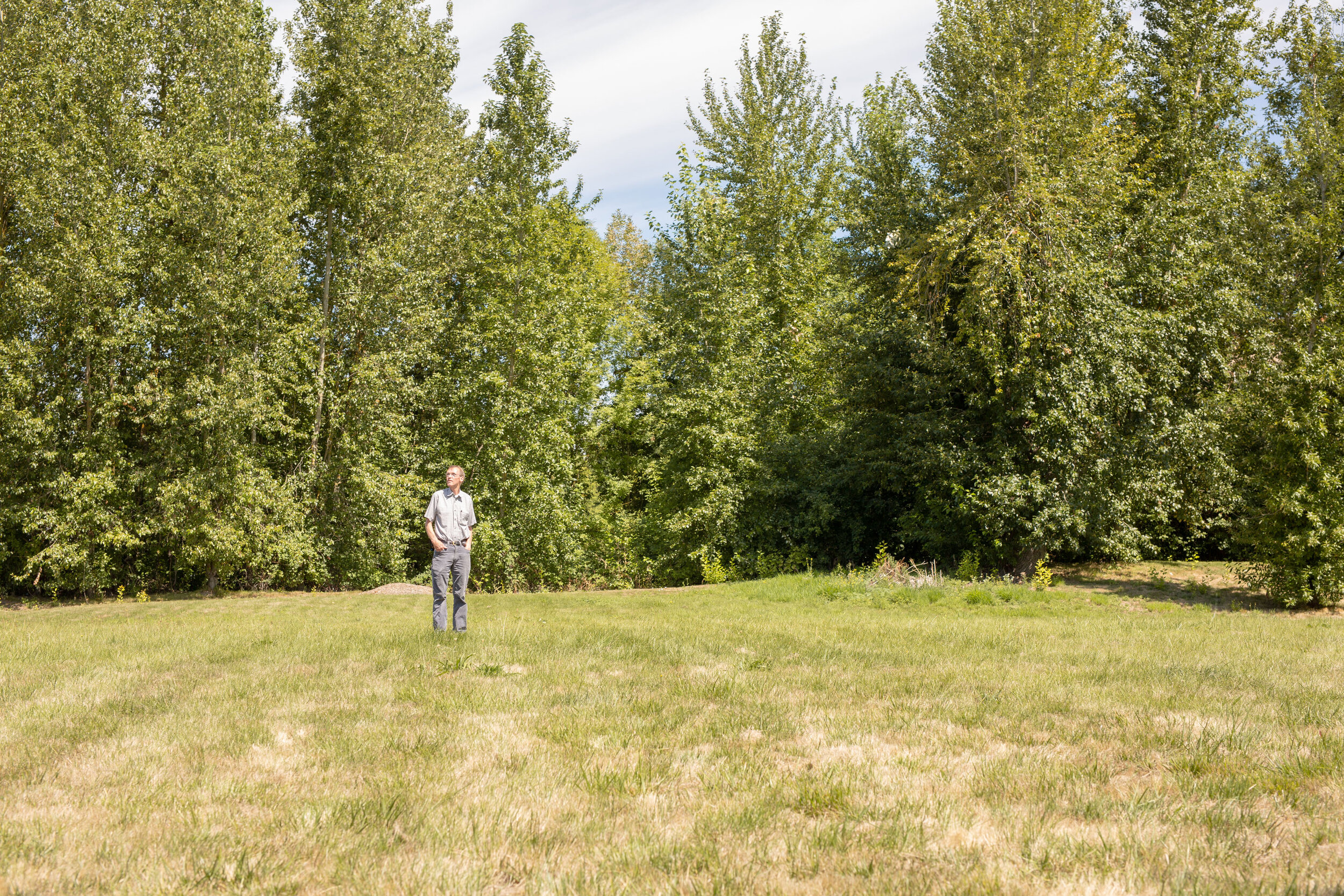
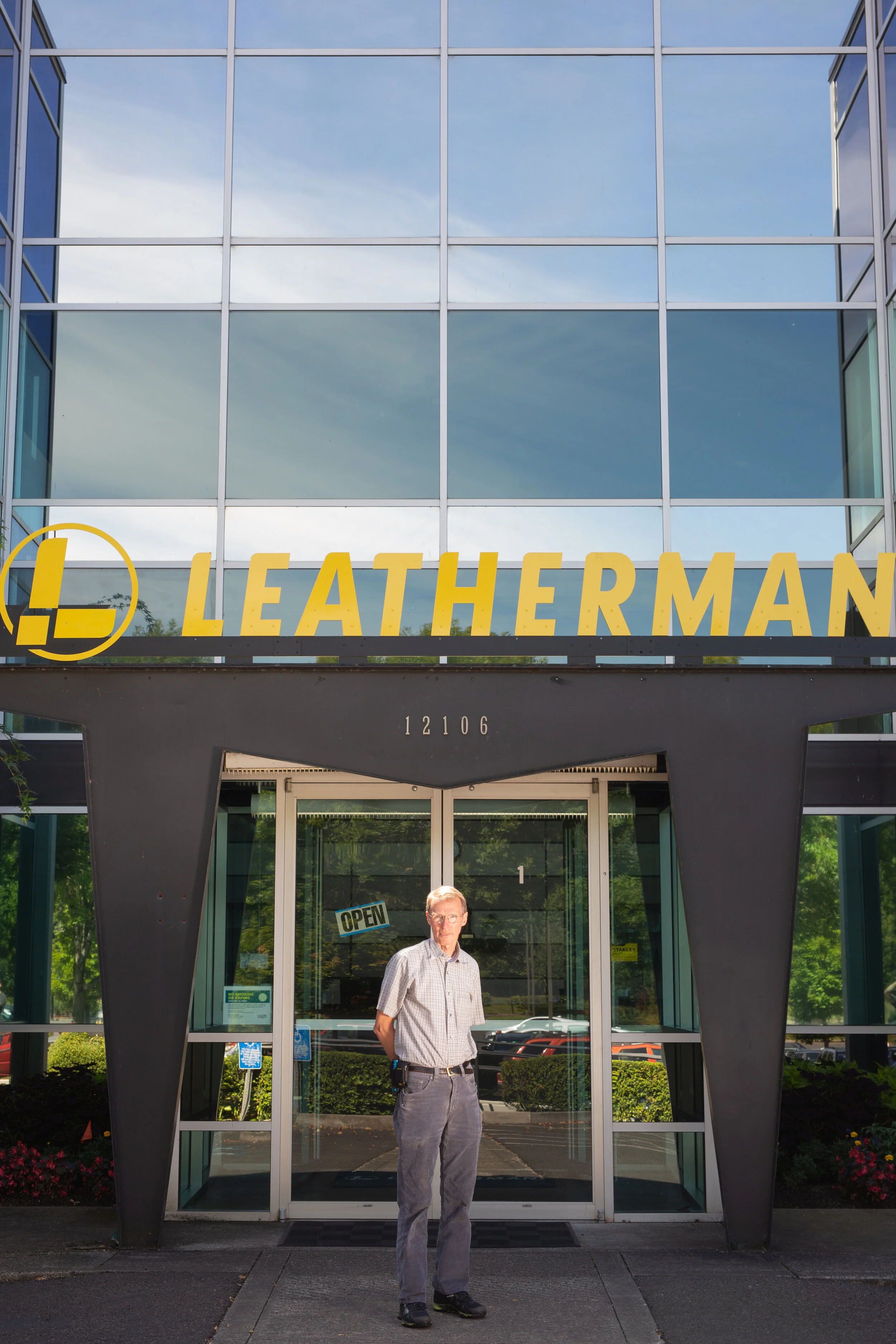
Tim is what one might consider the quintessence of small beginnings. An easygoing man, he evokes memories of your high school shop teacher. Wiry frames rest on his nose while he sports a collared, button-down shirt that serves equal parts presentability and function—in most instances, the top button is undone. Perhaps a pen or two emerge from his breast pocket while grey corduroy pants are held up by a belt with holsters; in one is a flashlight, and in the other his titanium Leatherman.

His original idea for a multitool design stemmed from a cross-country road trip through Europe and the Middle East that was highlighted by repair sessions on a rundown 1969 Fiat 600. After realizing his pocket knife lacked a pair of much-needed pliers, Tim returned to Portland, Oregon where he took eight years to produce the very first Leatherman tool in his garage. Despite initial hesitation from most every knife and tool catalog in the country, Tim was soon filling orders for 500, 750, and even 1,000 Leatherman PSTs per week. 

leatherman-outstanding-in-field.jpg

Back in the “torture chamber,” Tim cuts a seatbelt with one of the Leatherman brand’s many tools. As it turns out, the device has saved countless lives from car crashes, and the company therefore needs to ensure its life-saving duties. 

Tim goes on to perform his signature test as he removes a business card from his pocket. With the wire cutters from his Leatherman, Tim makes a few cuts in the edge of the paper card, illustrating the tool’s precision. But then he goes a few steps further, inserting a 12-gauge nail into the wire cutters before clamping down until the nail cuts cleanly in half. He performs this test around the world with his personal Leatherman, and does so without fail.

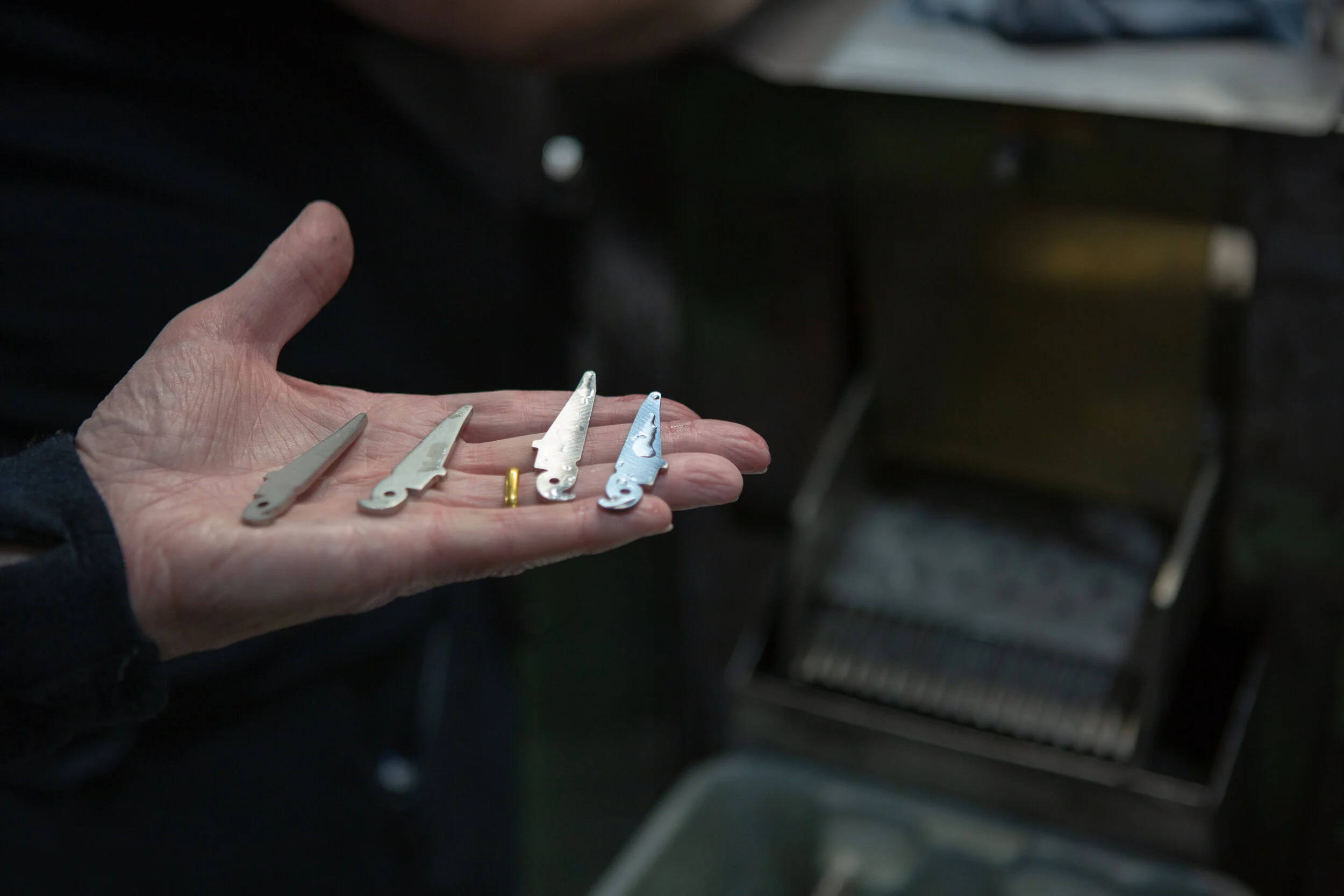
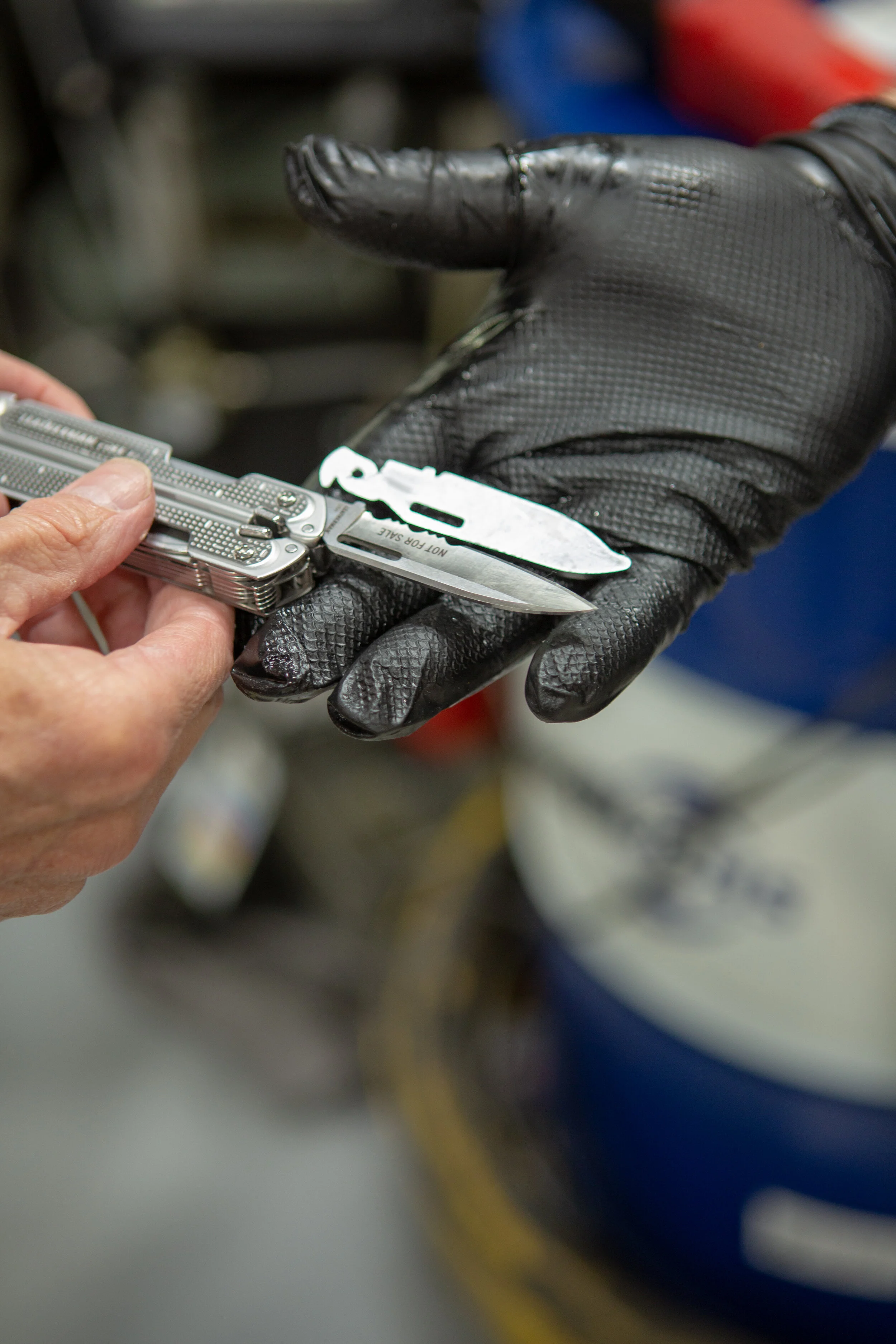
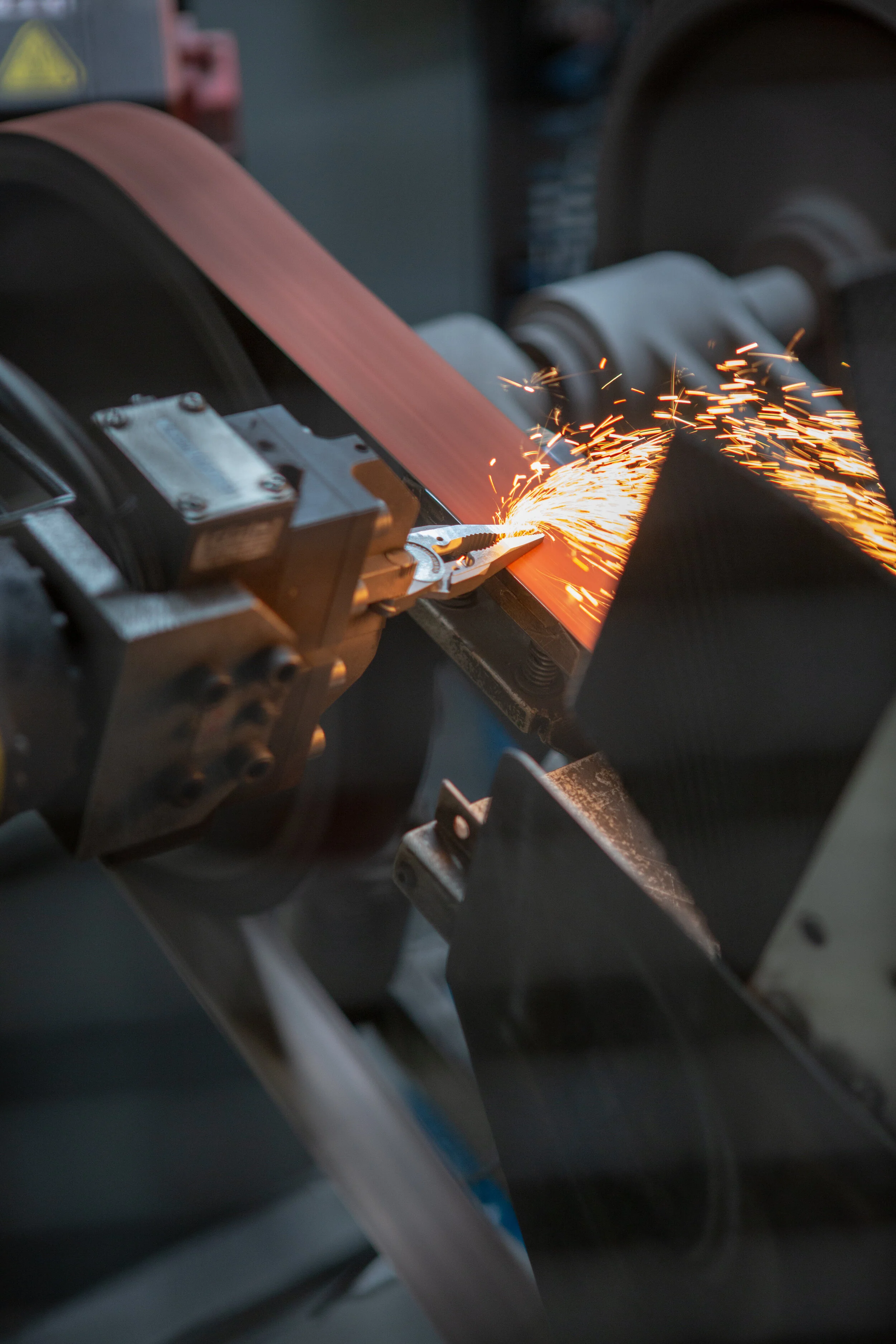
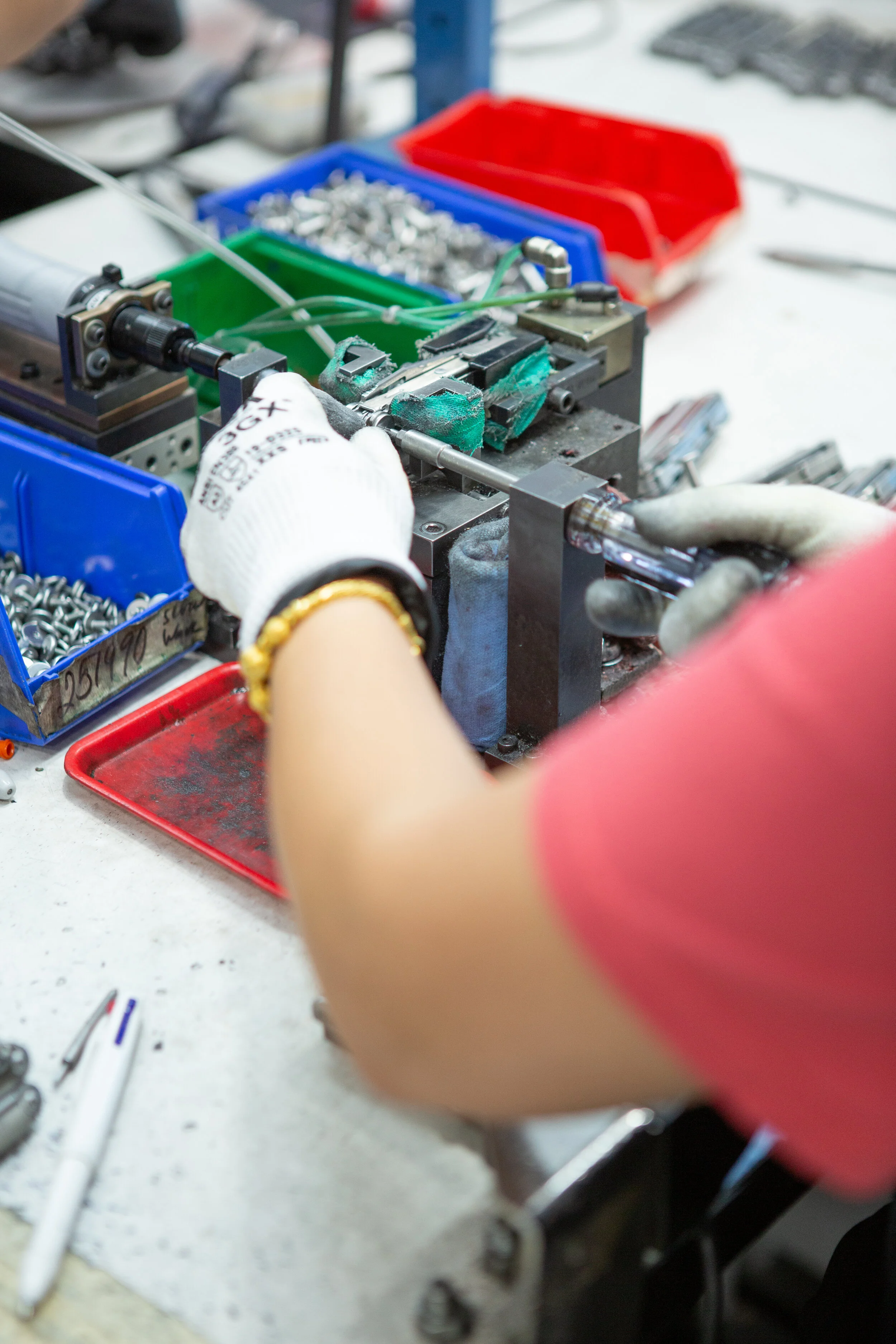
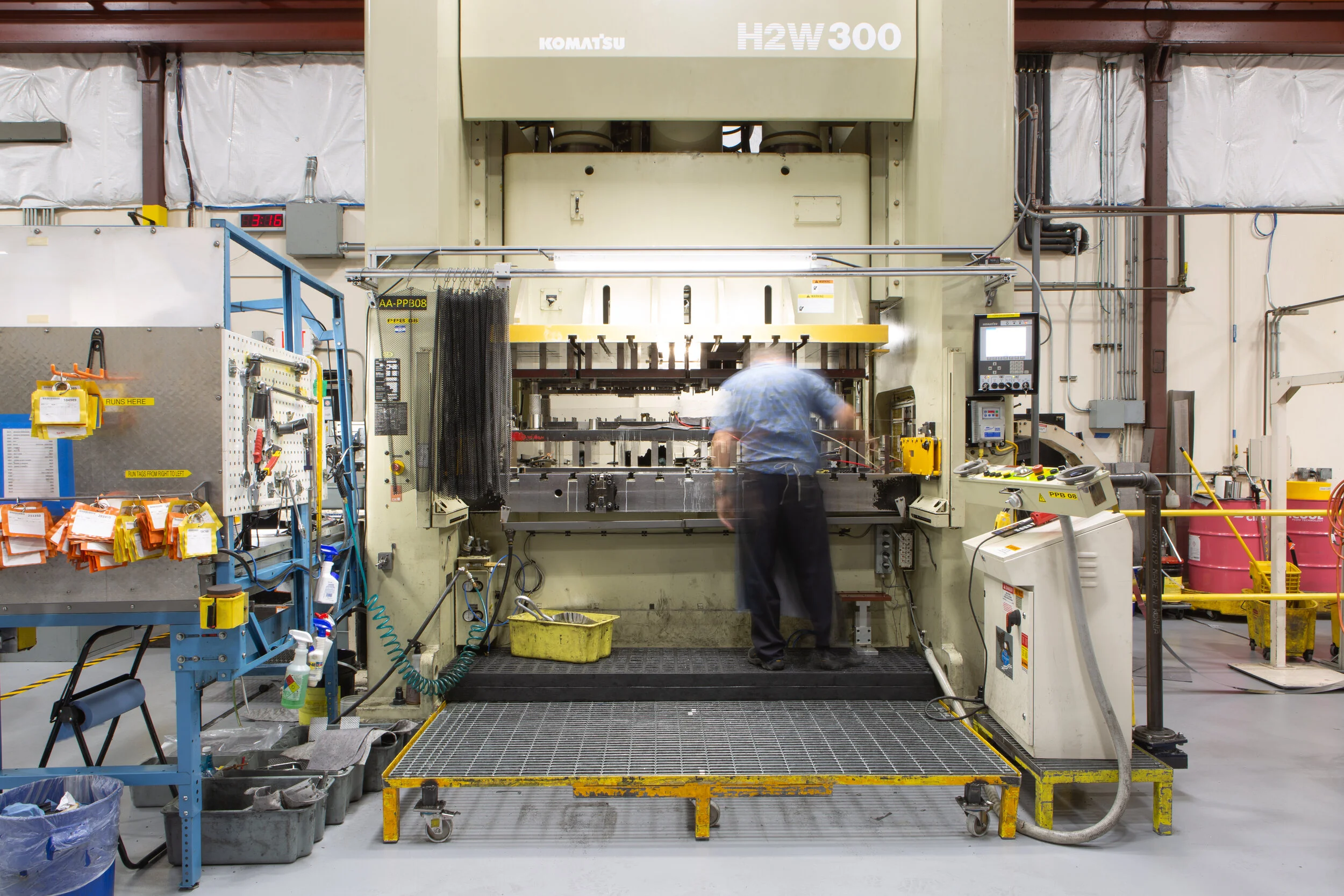
Beyond the testing room, Tim provides a tour of the manufacturing floor. What starts as a spool of steel from a mill in Ohio becomes the very multitool that rests on his hip. Each step of the production process is treated like a small business in which utilizing the very best materials translates to a purposeful tool for the customer. Everything is constructed with trust and pride in this space.

On a separate rack of the production floor sit the many die castings that form each and every Leatherman tool SKU. Equivalent in price to that of a car, each individual die is far more valuable than one might assume upon first glance; Tim aptly named the huge rack of dies his “parking garage.” 

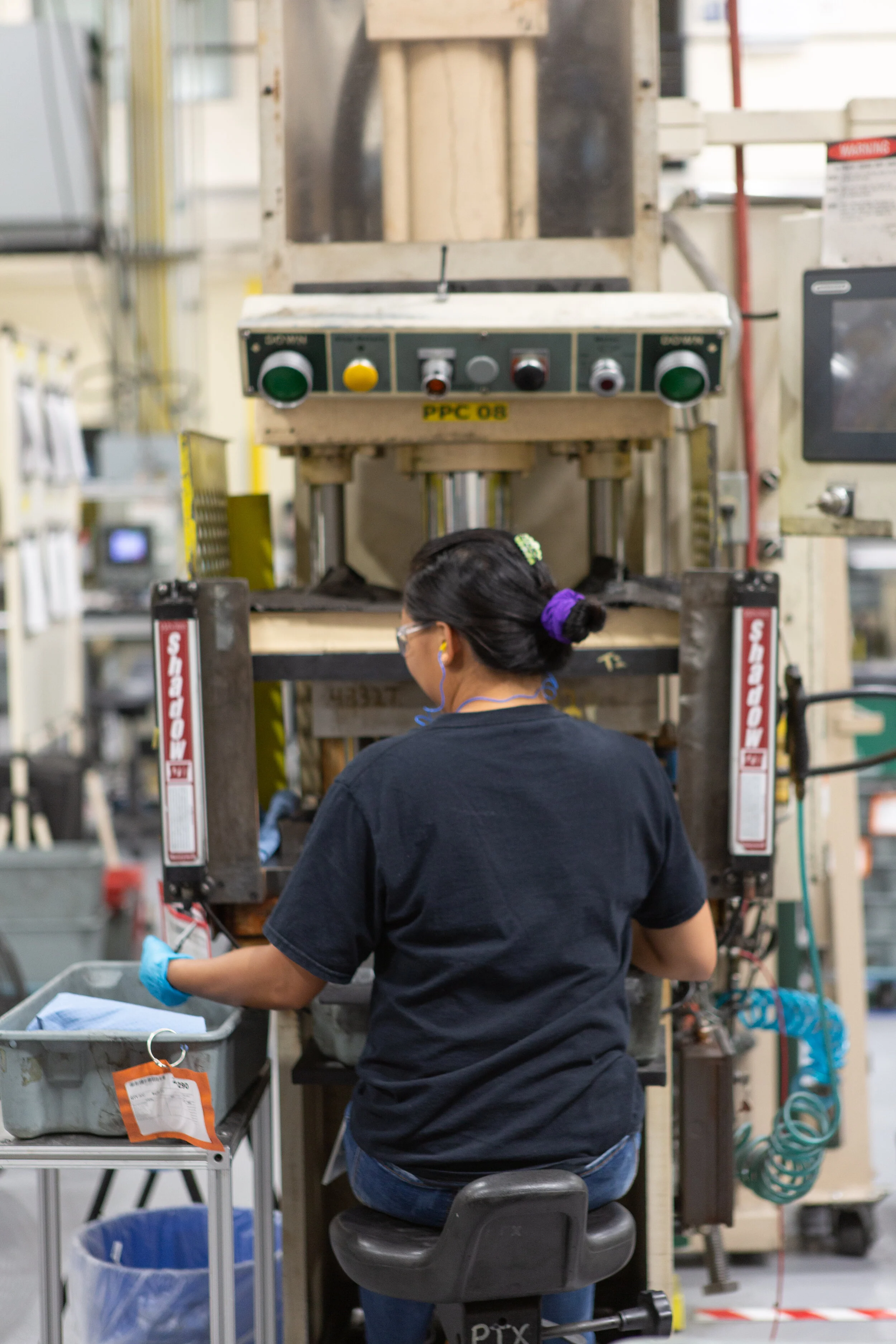
The production process on the floor feels rather human. Leatherman takes pride in employing American workers to produce their tools rather than relying entirely on  automation that continues to phase out jobs. The company has instead expanded as new positions become available—a rarity in modern American manufacturing. “I’m really proud of the jobs created as a result of the success of Leatherman tool,” notes Tim. “That’s probably, to me, my greatest legacy, the jobs created here in Portland, Oregon.” 

And while one might assume the factory floor would be a scene of lumbering men in flannels and Carhartts that just returned from a night’s stay in the Mt. Hood National Forest, in fact it is anything but. Instead, everyone from each walk of life is present and accounted for. Oddly enough, it all feels a bit like family.

_98A3444-Edit.jpg

As we prepare to leave, Tim reveals a dremel tool and signs our various Leatherman that we’d brought along for the journey—the one my father handed down to me included. Afterwards he places the dremel tool into a homemade sheath, fashioned out of an old toothpaste container. In time, we say our goodbyes.

There’s something about that single gesture that encapsulates the Leatherman brand so well.

Leatherman’s worldwide success is a product of the greatest multitooled minds that work together with a sense of humble passion. The company, no matter how much they may grow, remains small at heart in a location nestled discreetly along the Columbia River. The Leatherman is a symbol of Americana, that rare functional object passed down from father to son, and so on. It’s the tool that’s made appearances in the X Files, Speed, The Hurt Locker, and other Hollywood blockbusters. It’s also the same tool that millions of us carry and put to use every single day.

_98A3290.jpg

Perhaps 15 years have passed since my father’s Leatherman PST came into my possession, and still it remains close by. So close, in fact, that I could blindly unzip a small pocket on my backpack with the flick of two fingers to unveil it once again. As I upgrade my Leatherman multitool to something a little more modern, the old one passed down by my father sits on a shelf for display. Rest assured, a day will come when it’s needed once again. And when that day comes, it will always be ready, leaving nothing undone. 


Learn more // Leatherman.com

Think Local Skate Global

Stay Wild

Interview by Justin “Scrappers” Morrison // @scrappers 

2019_Brand_Vanguards_Yndiara_CheckeredNoComply.jpg

Are you open to suggestions? I’ll pretend you said “yes” if you’re still reading.

Suggestion #1: Bring a skateboard when you travel. Suggestion #2: Stay home.

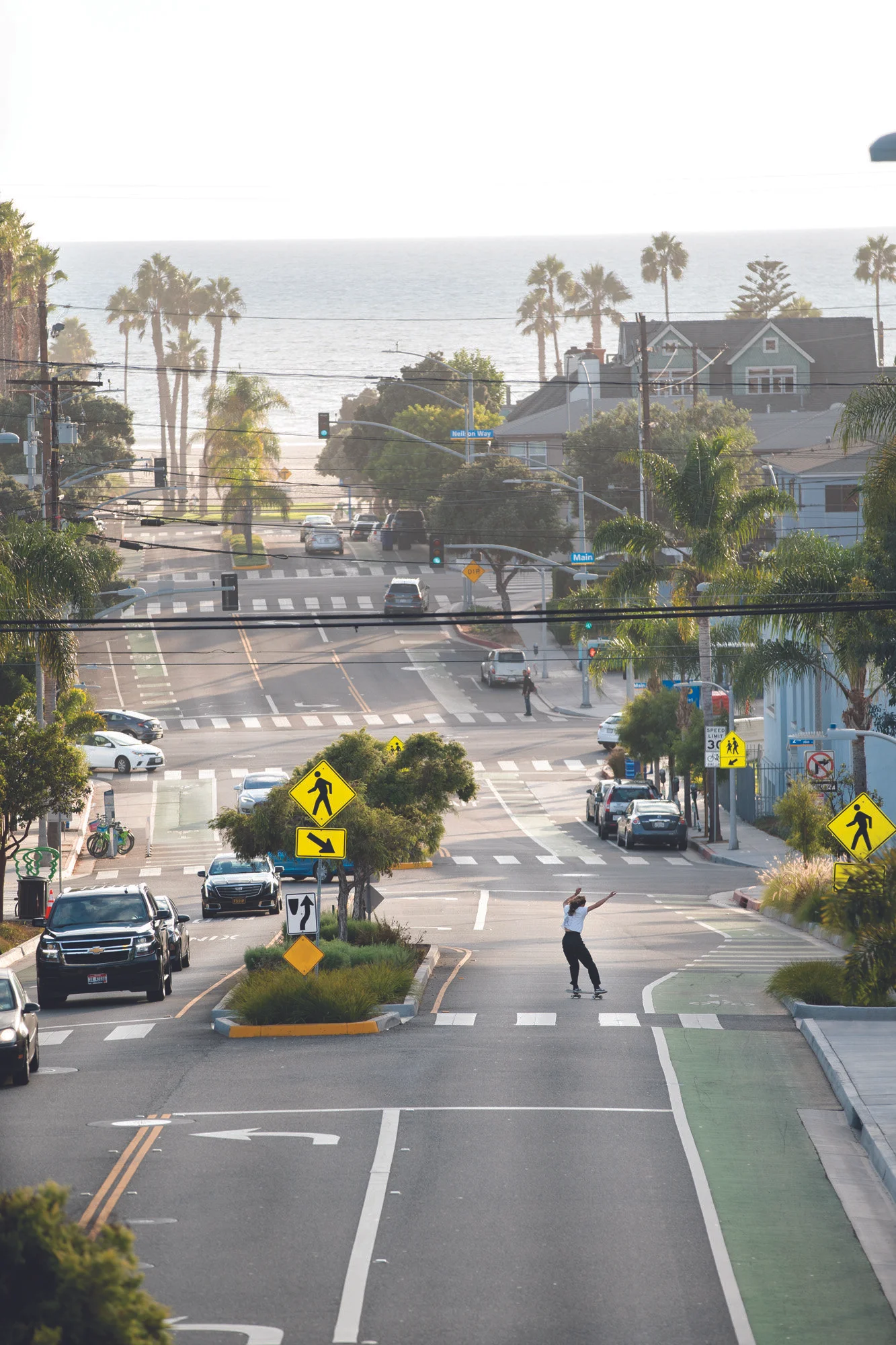
Why bring a skateboard? Duh, it’s a free ride. Beyond money stuff, it’s also a more sincere way to get to know a place. Like a dog sniffing the cracks and curbs of a sidewalk, you’ll get to know the flow of a new place with an intimacy some uber-dumb taxi app could never give you. With those wheels you’re also more free to flow, and free to invent new routes with each swoop of a kick and push. The strongest reason, though, is that traveling with a board is more fun and surprising. 

Why stay home? Duh, it’s cheaper. But for reals, travel is expensive and can be harmful to the eco/socio-environment. Ain’t nothing wrong with a staycation. There are always new places to explore in your own special part of the planet. Get to know your local spots and become an actual local. 

These are just suggestions. Take ’em or leave ’em. I’m not going to try to convince you that traveling with a board and being more local is good for you. Instead, I’m going to ask some of my favorite Vans global skate team riders what they think. 

2019_Brand_Vanguards_Yndiara_00b50019.jpg

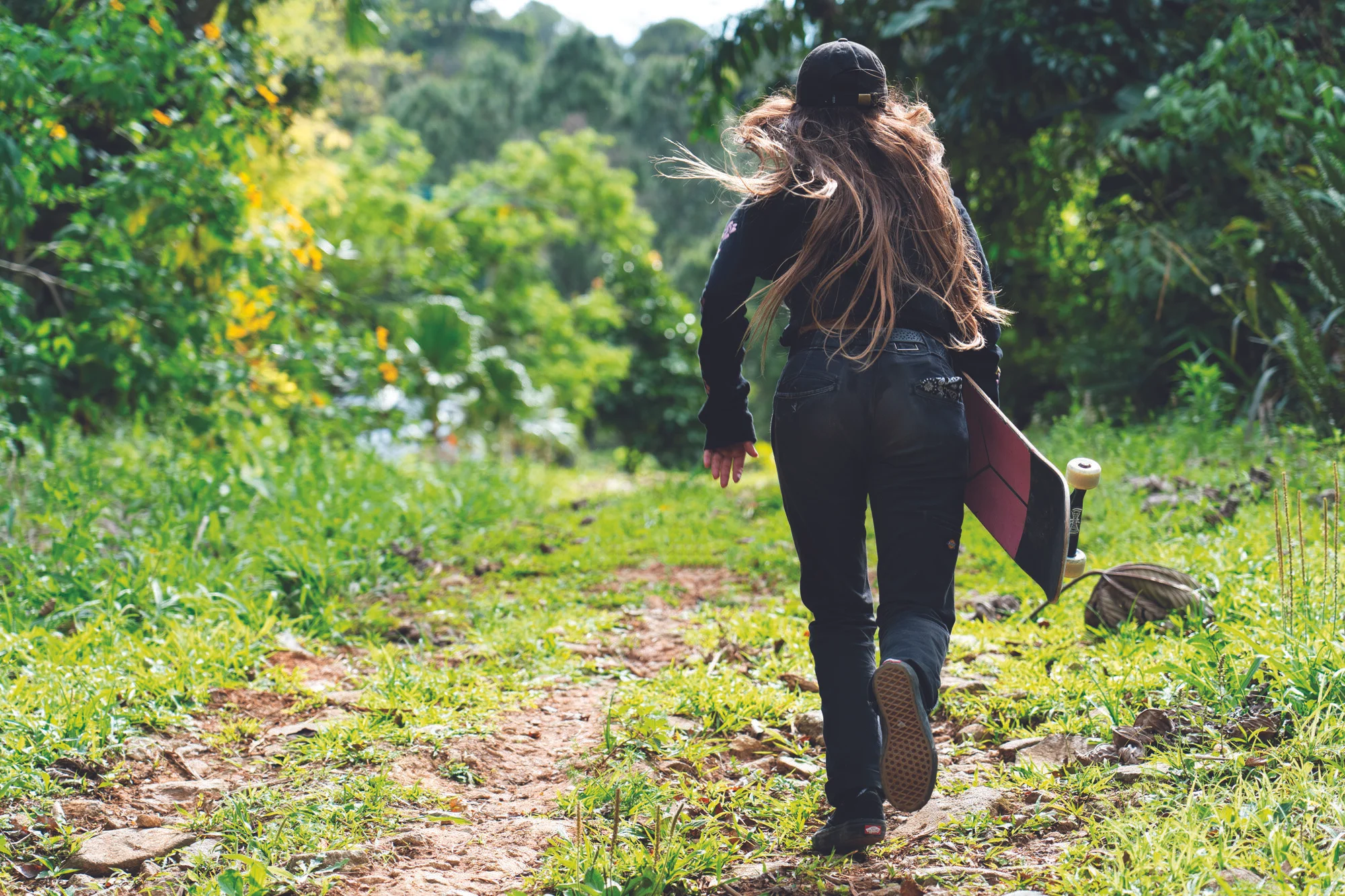
Yndiara Asp // Brazil

Where are your favorite local spots to skate?

My favorite local spots to skate are Hi Adventure in Florianopolis and Cave Pool in São Paulo.

How would you describe the local vibe towards visiting skaters?

Skateboarding is a big family. Most of the skaters I know are very respectful most of the time. 

What advice do you have for visitors who want to skate your special part of the planet?

You got to have respect, be nice, and have fun!

Do you take a board with you when you travel?

Always, it’s me and my skateboard around the world. Skateboarding is more than just my “job.” It’s my lifestyle, my hobby, my vehicle—it’s my partner in life.

What advice do you have for other women who want to skate, but hesitate to get out there?

You don’t have to be good to start something, you just have to start to be good. A lot of things in life seem so hard, but once you start to try it, you realize it’s possible. Believe in yourself and be persistent.

How far has skateboarding taken you?

Farther than I ever thought I could go. 

2019_Brand_Vanguards_Mami_00b90007.jpg

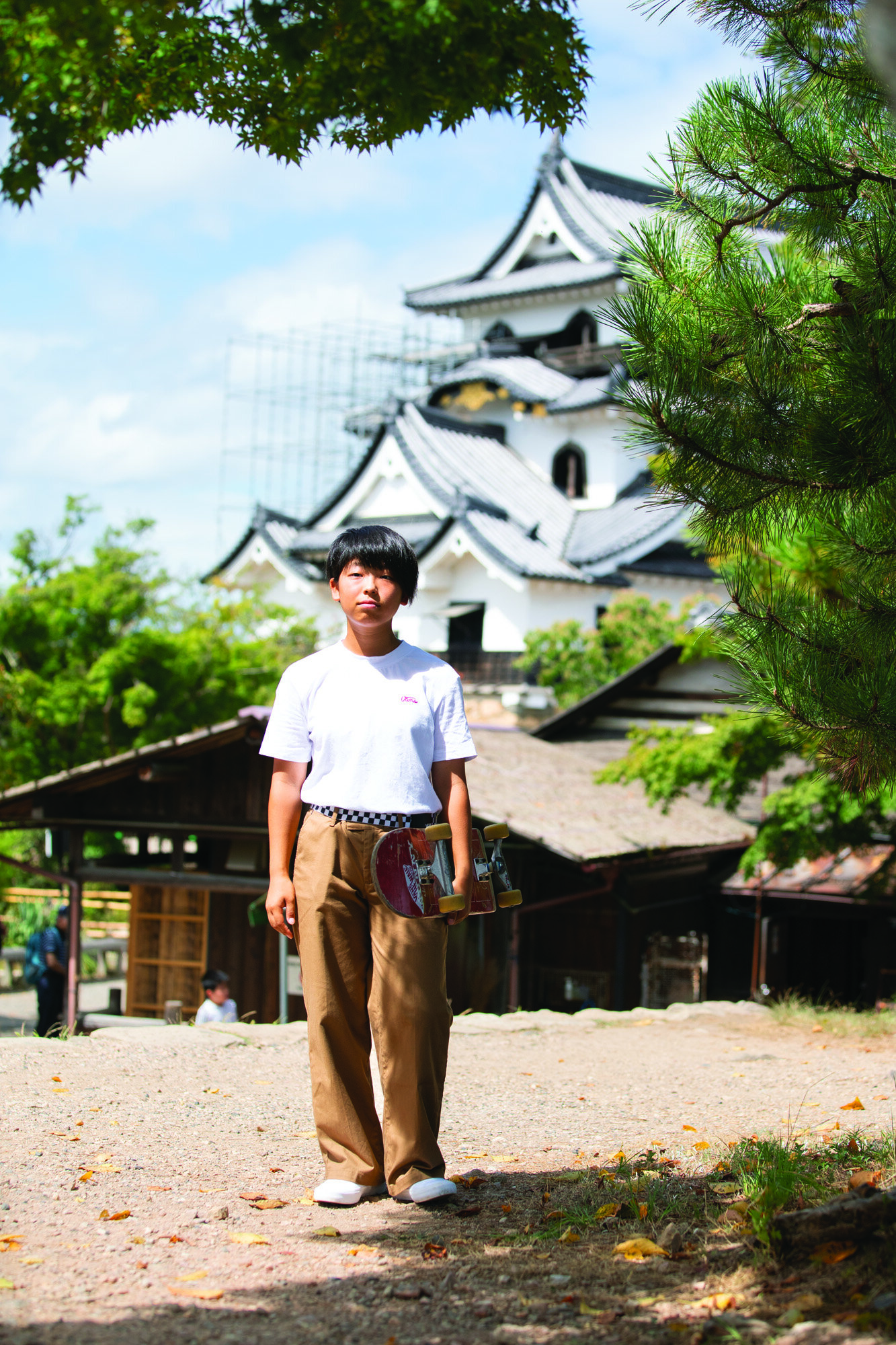
Mami Tezuka // Japan

What is your favorite local spot? 

Huckleberry Skatepark in Shiga.

How would you describe the local vibe towards visiting skaters?

They have a skate session together and then take them to a local food spot!

What advice do you have for visitors who want to skate your special part of the planet?

I recommend the DIY park in Ryuou and the rice ball-shaped tunnel. 

Do you take a board with you when you travel? 

I have my skateboard with me most of the time since the purpose of most of my travels is for skateboarding. 

What advice do you have for other women who want to skate, but hesitate to get out there?

Be brave! If you don’t want to skate by yourself, bring your friends to the park! I can’t take any responsibility if you become addicted to it though, haha.

How far has skateboarding taken you?

I now have friends from all over the world. I have had the chance to travel to many different countries and got to meet a lot of great people because of skateboarding.

2019_Brand_Vanguards_Lizzie_DSC2701.jpg

Lizzie Armanto // California

Where are your favorite local spots to skate?

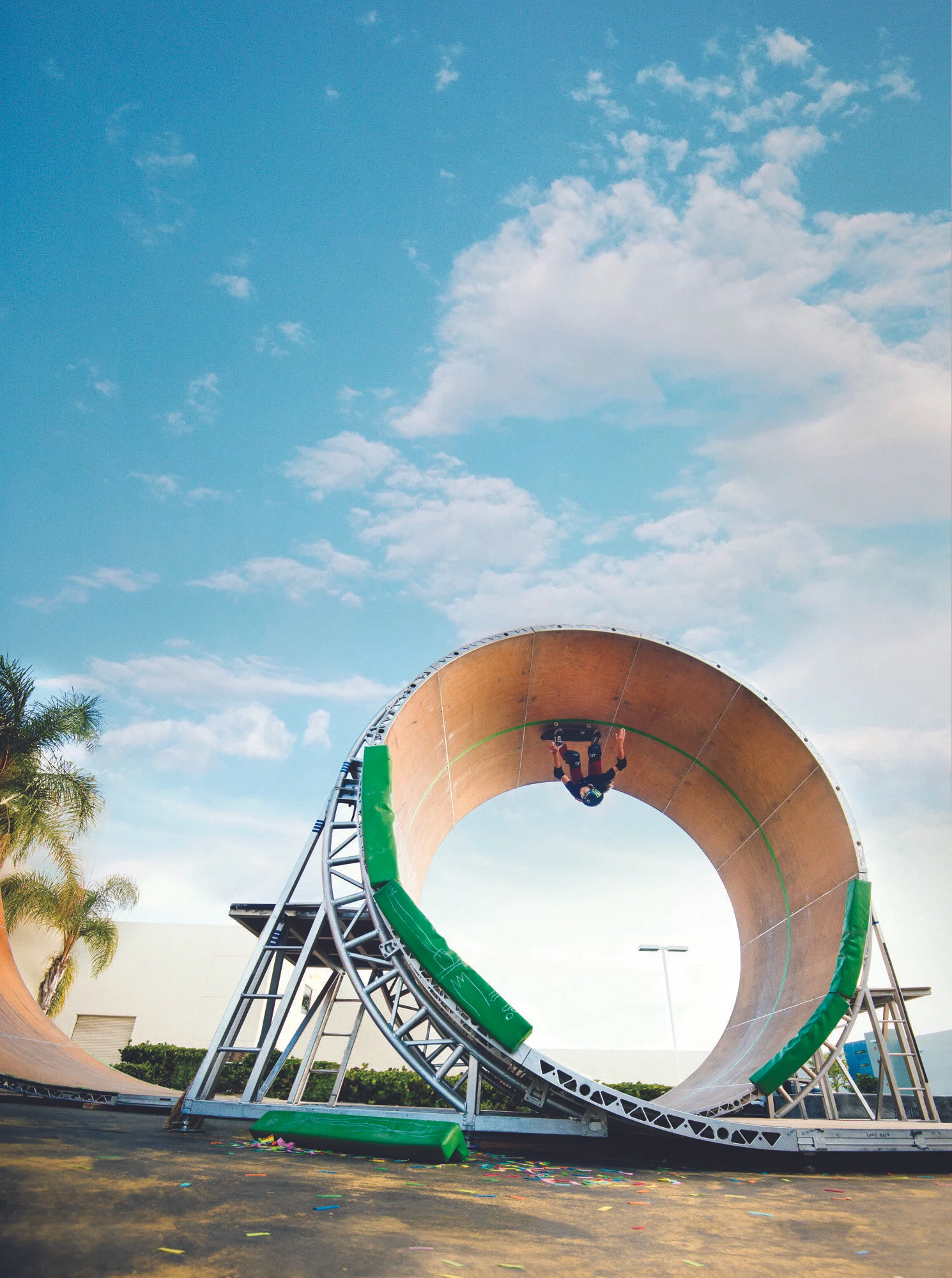
Vans Huntington Beach, Vans Orange (Combi), Tony Hawk’s vert ramp, Prince Park, Linda Vista, and Washington Street.

 How would you describe the local skater vibe towards visiting skaters?

The skate vibe in southern California is for the most part really mellow and welcoming to skaters from all over the world. Of course some of the private places tend to be more exclusive and you have to be friends with them to skate there, but any public park in Southern California will welcome you with open arms.

 What advice do you have for visitors who want to skate your special part of the planet?

Be respectful and know that we’re all there for the same reason: to have fun.

 Do you take a board with you when you travel, and if so why?

Absolutely. I’m always late for my flights and it’s way faster skating through the airport and looks better than running like a maniac, haha.

 What advice do you have for other women who want to skate, but might be afraid to get out there?

There’s nothing about skating that’s any scarier than driving a car or walking through a Trader Joe’s parking lot. Don’t be intimidated and know that everyone at the park started exactly where you are. 


This story was made with our friends at Vans.com // @vans

Far Gone Fishing

Stay Wild

Three Dudes, Six Wheels, and a Quiver of Fly Rods.

Story by Elle Ossello // @eossello

Photos by Mark Welsh // @markwelshphoto

Adventuring by Jonathan Jones @redbeard 

Jimi Damone @jimibobi_d

Jess Mudgett @jessmudgett


SAWTOOTH_COLLECTION_0010.jpg

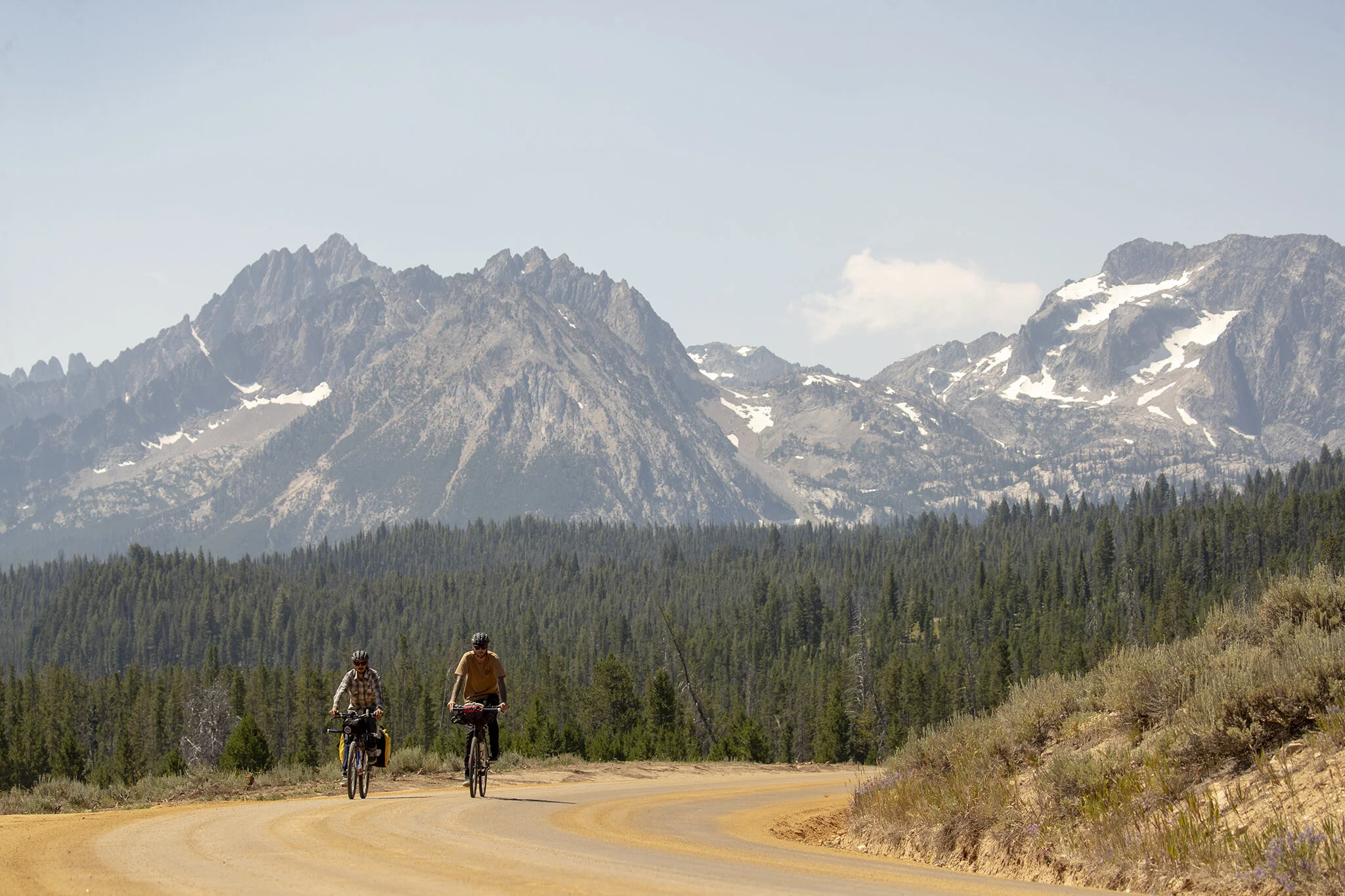
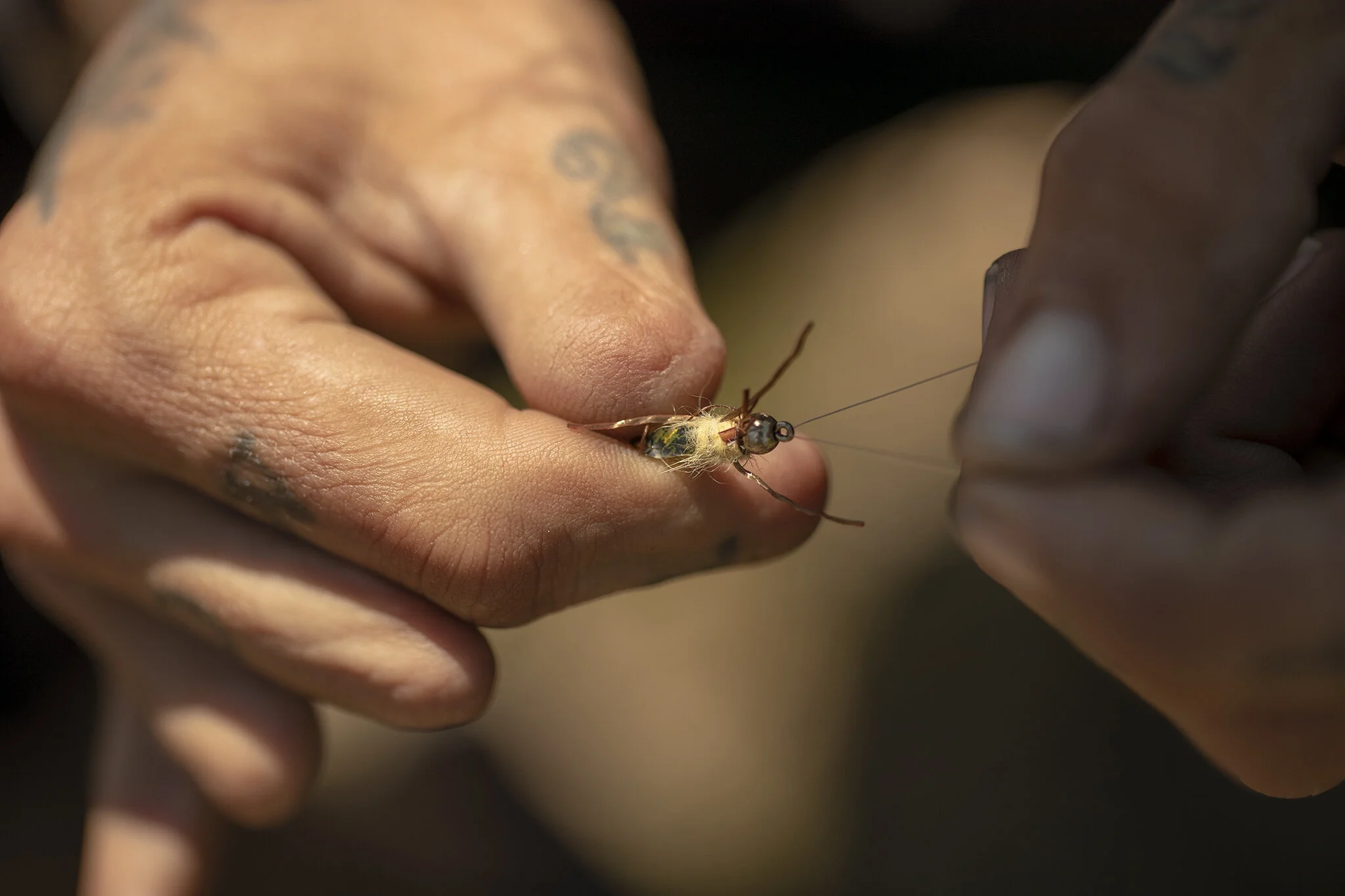
Imagine your last vacation. Only nix the flight booking, tank filling, and three square meals per day. Add in a winter’s worth of hand-tied flies, extra tubes, and a whole lot of lactic acid, and you’ve got yourself a rough picture of the bikepacking/fishing adventure Jono Jones, Jimi Damone, and Jess Mudgett got themselves into during summer 2018.

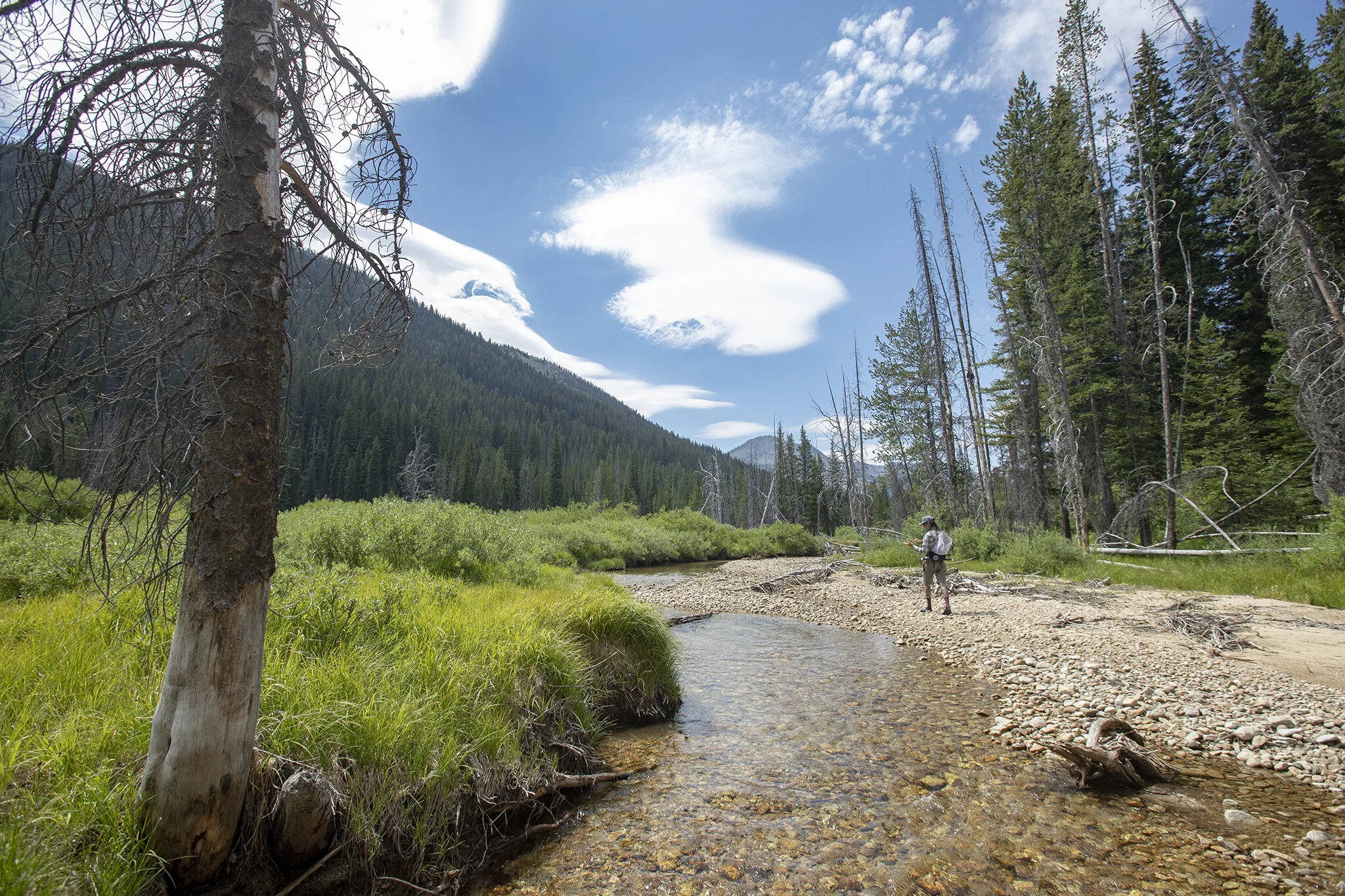
By the time Jimi and Jess hit Jono’s house in Fort Collins, Colorado, their bikes had already seen some long, hard pavement miles. But, with sights set on the Sawtooths and the promise of tight mountain creeks and feisty brook trout, the three made a week-long snack of southwestern Wyoming, kissing the bottom corner of Yellowstone with pedals.

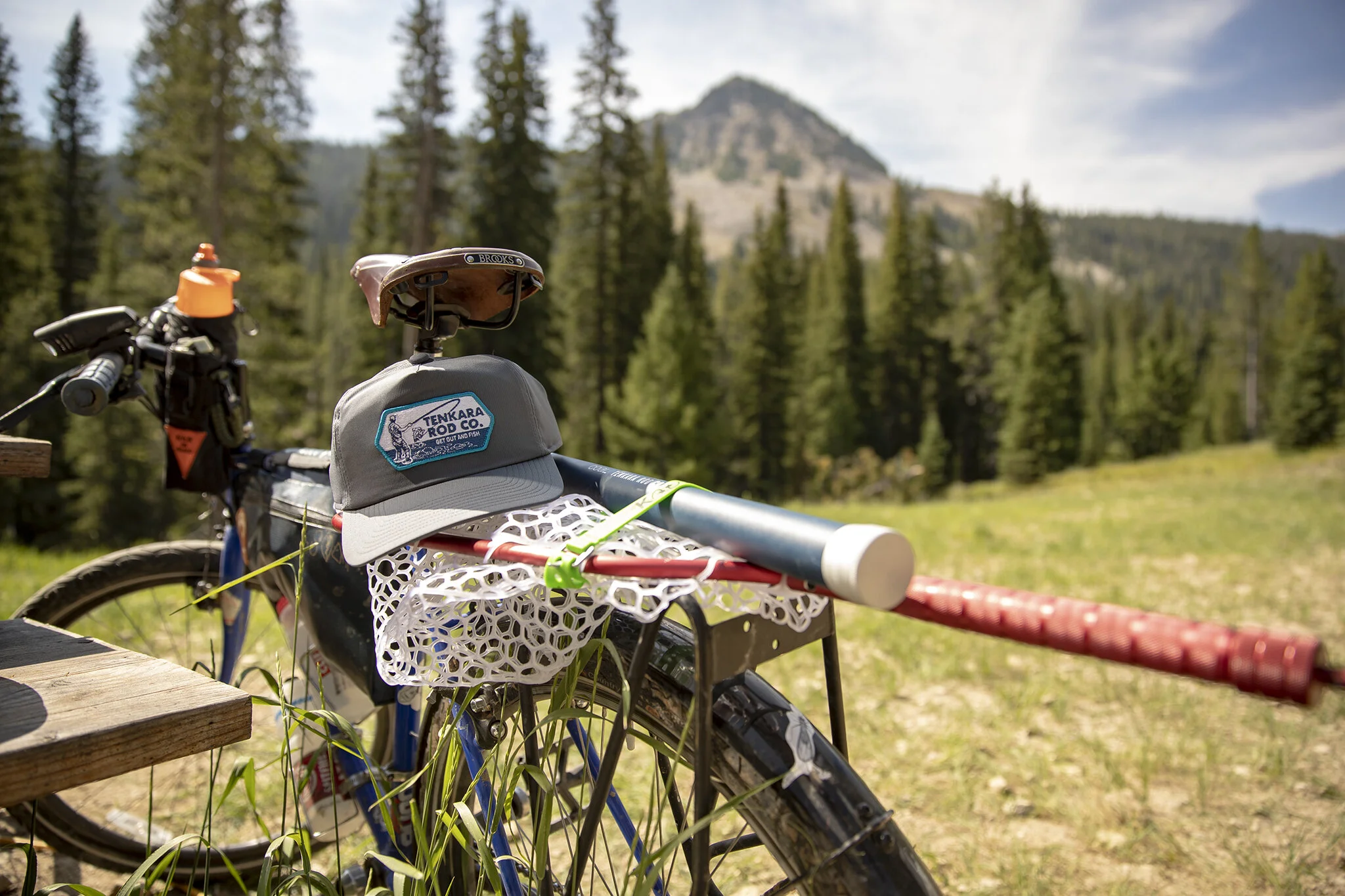
Six-packs filled their saddlebags and helped slow life’s pace once the tires finally crunched down dirt roads winding around Idaho’s most jagged and impressive range. That first night, they poured over maps, affixed lucky flies to Coal hats, unearthed Tenkara rods from gear towers, and reminisced about past hogs while watching constellations meander amongst craggy peaks. The next morning the guys housed raspberry crumble in the alpenglow before pedaling twisted dirt roads paralleling bony creeks. “There’s something about the way the fish hit hoppers in the Sawtooths,” Jimi said, “hatches, sights—it’s all about just heading north and staying upright, letting the adventure take hold and riding with it.”

COAL_SS19_TENKARA_54.jpg

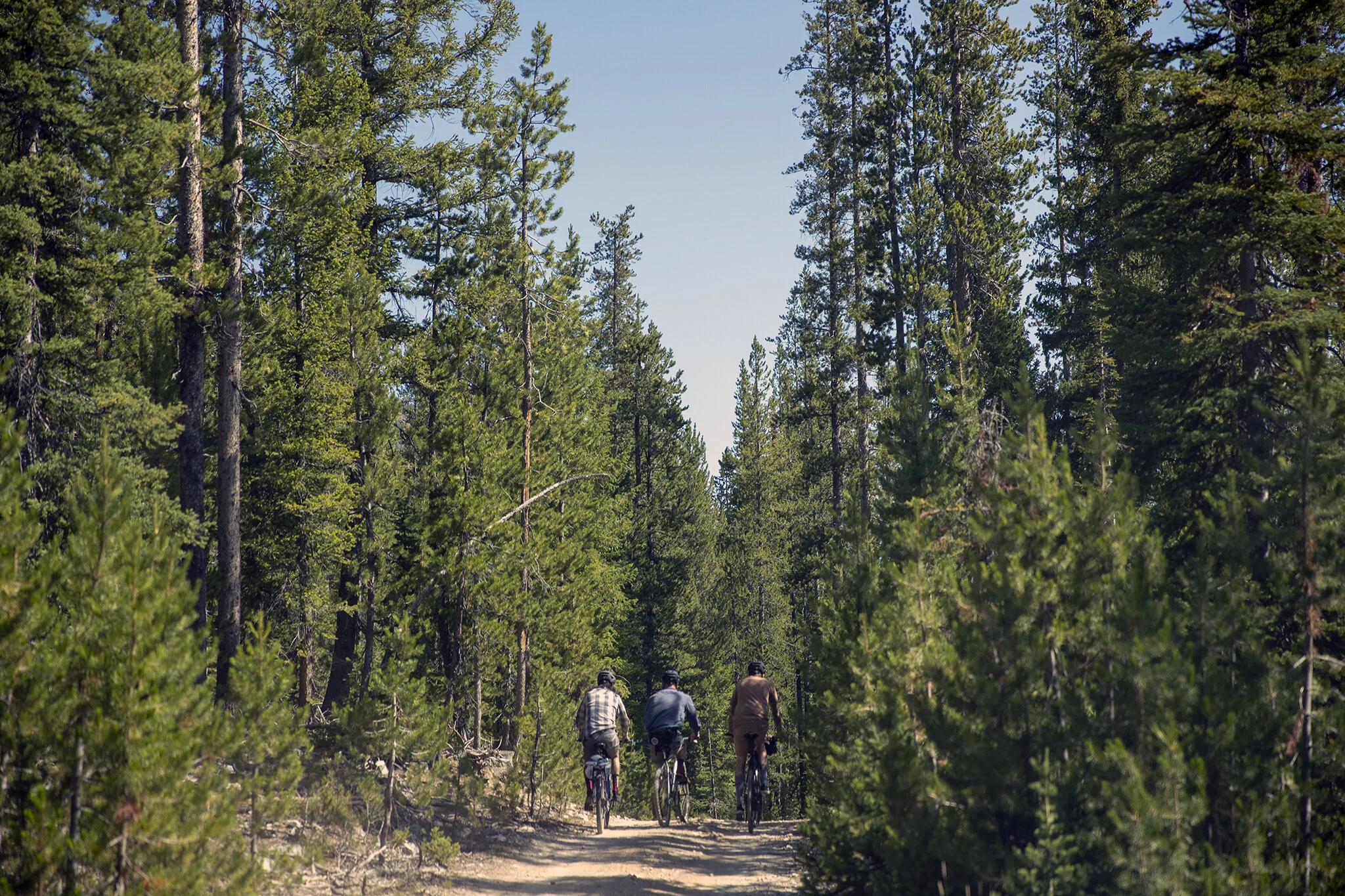
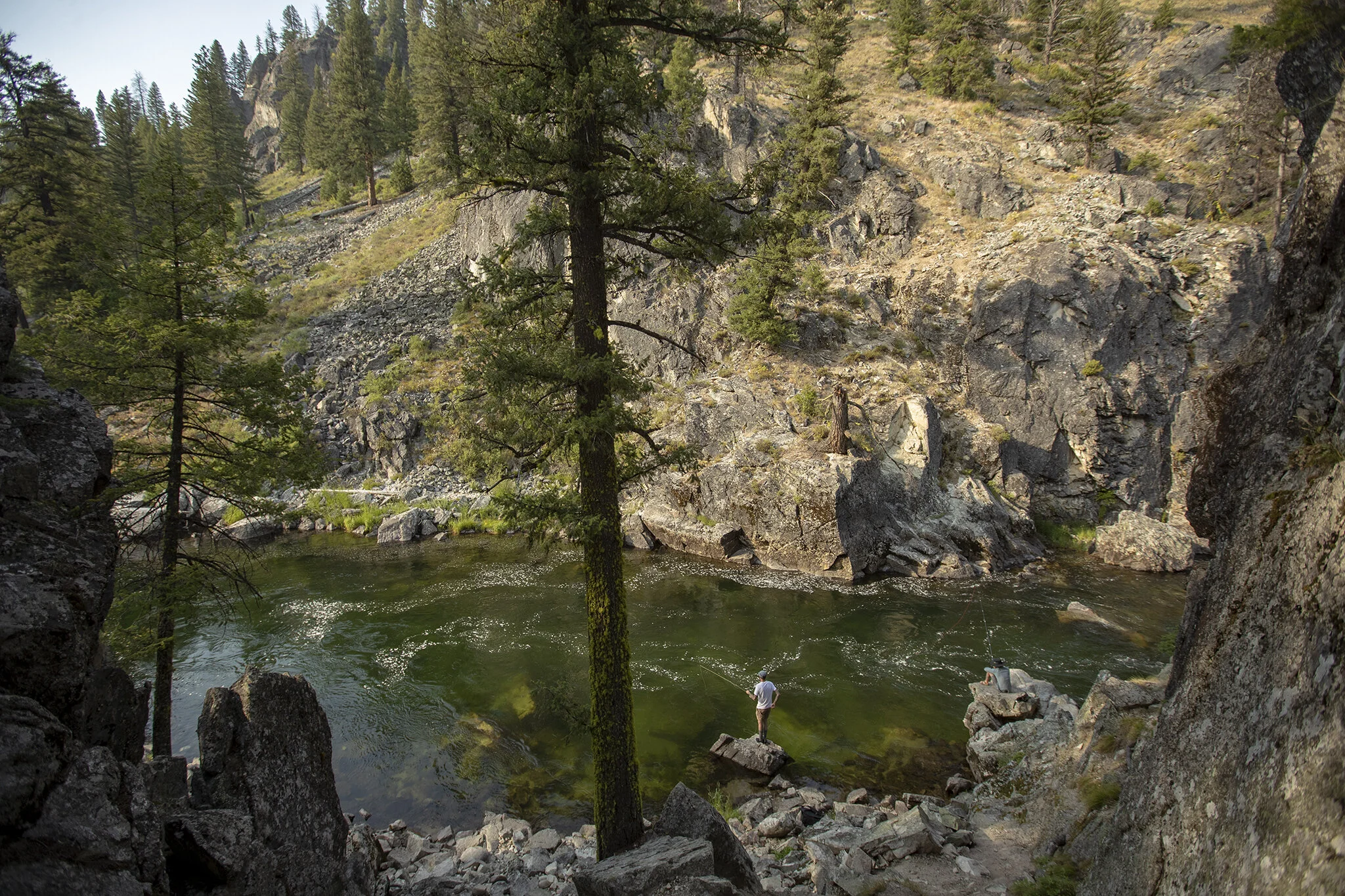
The trio quickly fell into the trip’s rhythm: coffee, dawn casting, packing up camp, and mashing out some miles before a little honey hole called them off their bikes. “Days and laughter felt endless,” Jono remembers. “When the fishing was slow we had flat tires to fix, would slip into the river, or simply sit back and soak it all in while the conversation flowed.” 

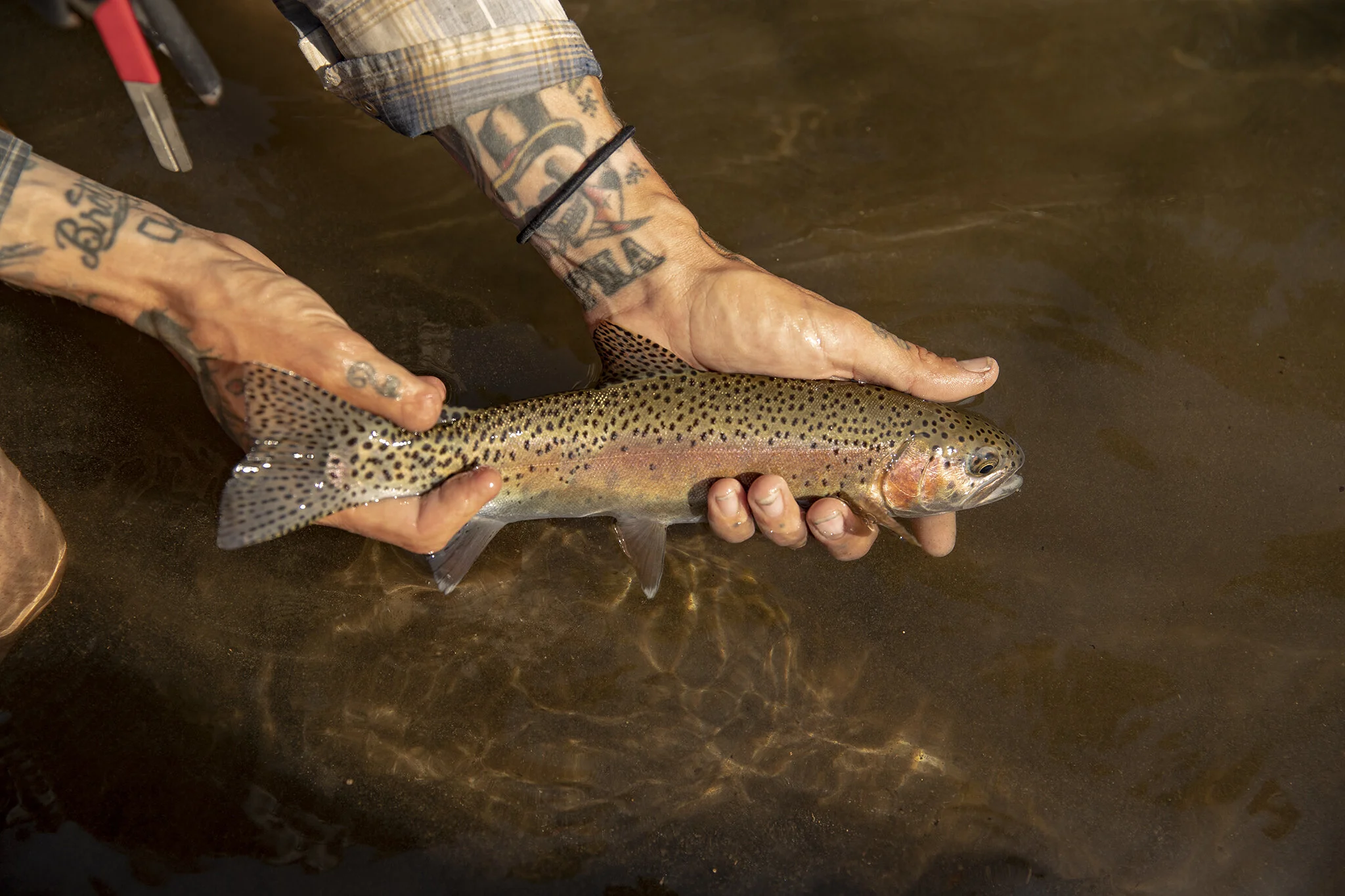
The miles were easier, the winding creek more familiar, and choosing spur roads felt effortless as time passed. “It was so good to slow down and focus on simple things,” said Jess. “Where we are going to eat next, what river holds trout, is that ground flat to sleep on, and where can we find cold beer.” Over the miles, they hooked plenty of trout, saw mining caves, soaked in tucked-away hot springs, and took riverside cat naps. “In the end, we got into some good fish.” Jess says, “but honestly I couldn’t stop staring up the entire trip. The mid-summer Sawtooth sky is incredible. Trips like this are important to test yourself and your friendships, not to mention getting time to stop and look around. I now have a greater appreciation for the Sawtooths and friendship with these mates.” 

COAL_SS19_TENKARA_21.jpg
COAL_SS19_TENKARA_55.jpg

This story was made with our friends at Coal Headwear 

coalheadwear.com // @coalheadwear